REQUEST FOR PROPOSALS: EHRA is pleased to announce a new RFP on Selection of simultaneous interpreters

RFP Number EHRA-01-03
RFP Title External consultant. Simultaneous interpreters
RFP Closing Date and time: 24:00 EET on January 31, 2022
Proposal Submission Address: info@harmreductioneurasia.org

Background

Eurasian Harm Reduction Association (EHRA) is a non-for-profit public membership-based organization uniting harm reduction activists and organisations from Central and Eastern Europe and Central Asia (CEECA) with its mission to actively unite and support communities and civil societies to ensure the rights and freedoms, health, and well-being of people who use psychoactive substances in the CEECA region.

More information about the Association and specifics of the work you can find on our website: https://old.harmreductioneurasia.org

Objectives of the tender:

EHRA announces a tender for the selection of simultaneous interpreters from English into Russian and from Russian into English for long-term cooperation (remote online work). Based on the results of the tender, several simultaneous interpreters will be selected, with whom EHRA will sign long-term contracts.

Evaluation criteria:

Submitted applications will be evaluated by the evaluation panel of the Eurasian Harm Reduction Association.

A two-stage procedure will be utilized in evaluating the proposals:

  • evaluation of the previous experience (portfolio) via technical criteria – 80% in total evaluation;
  • comparison of the costs (per-hour cost in EUR) – 20% in total evaluation.

Cost evaluation is only undertaken for technical submissions that score a minimum 80 points out of a maximum of 100 as a requirement to pass the technical evaluation. A proposal which fails to achieve the minimum technical threshold will not be considered further.


 To assess submitted applications, the following technical criteria will be used (80%) (maximum possible number of points is 100): Points
Simultaneous interpretation experience in public health and human rights, harm reduction, drug policy, response to the HIV epidemic (at least 1 year) 50
Academic background (degree in linguistics, philology, etc., special courses for interpreters, certificates, etc.) 50
Maximum possible number of points 100

Cost proposal (20%): EHRA will allocate same importance to the provided portfolio and recorded experience as to the cost of the services. The cost proposal will be evaluated in terms of best value-for money (per hour cost in EUR working remotely online).

How to apply

To be eligible as an EHRA consultant, any organization or individual must comply with the Eurasian Harm Reduction Association Code of Ethics which you can find at the following link: https://old.harmreductioneurasia.org/ehra-code-of-ethics/

Applicants must submit the following documents:

  1. CV with relevant information in the field of simultaneous interpretation and education.
  2. Application (motivation letter) in free form, in which you must specify:

–   cost per hour in EUR of remote work online;

–  the subject matter in which you are working, taking into account the specifics of EHRA, especially highlighting services for UN agencies or the Global Fund, services to combat HIV, TB and malaria;

–  contact details of persons for whom you have provided interpretation services in the last 6 months (2-3 events).

Please submit your proposal to info@harmreductioneurasia.org .

In the subject line of your e-mail please indicate the RFP number EHRA-01-03, the title “External consultant. Simultaneous interpreters” and your name. Otherwise, the application will not be considered.

ATTENTION. If these documents are not submitted in full, the participant will not be allowed to take part in the tender.

General terms

Interested consultants should pay attention to the following conditions:

  • This RFP shall not be interpreted as a contract or obligation of any kind. This invitation to tender does not in any way oblige EHRA to enter into contracts, nor does it oblige EHRA to pay any costs incurred in preparing and submitting applications.
  • Participants must confirm that the cost of the works specified in the application are valid for a period of at least 24 months from the date of the competition.
  • During the evaluation period, EHRA reserves the right to ask candidates to complete an additional task in the form of simultaneous interpretation.
  • Based on the results of the tender, a contract for the provision of services for a two-year period will be signed with the winners. The contract is not an employment contract. Payment of all taxes and social insurance is the responsibility of the contractor. Further work will be carried out in accordance with the request of EHRA, which will indicate the timing and other specific conditions.
EXTENDED. Request for Proposals: Grants to support the community-led activities focused on ensuring the sustainability of HIV / TB responses among KAPs within the transition from the Global Fund’s support to national funding in Republic of Armenia and Republic of Kosovo

Eurasian Harm Reduction Association (EHRA) invites initiative groups, organizations of communities of people living with or affected by HIV and TB, as well as non-governmental HIV and TB focused organizations being involved in the implementation of Global Fund grants at the national level in the Republic of Armenia and Republic of Kosovo, to apply for grants to support the community-led activities focused on ensuring the sustainability of HIV / TB responses among KAPs within the transition from the Global Fund’s support to national funding in these countries.

The proposed project activities must address the problem(s) prioritized by one or several key affected communities and fit one of the next priority areas for support:

∙ Community led monitoring of the relevant transition related process;

∙ Coordination/consolidation of different community efforts in watchdogging of the transitioning processes and advocacy;

∙ Community led advocacy focused on ensuring the sustainability of HIV/TB response among KAPs within the transition.

Period of implementation: January – July 2022

No more than 2 grants will be awarded (1 grant per country) for the period up to 6 months of implementation. The budget limit for each grant is US $ 6,500.

Deadline to apply: 23rd of December 2021 23:59 CET

For more details please read the Request for Proposals (RFP).

Application Form.

Work plan and Budget Template.

Announcement of the winners of media materials contest about the life and problems of people who use psychoactive substances

The Eurasian Harm Reduction Association (EHRA) has held a contest of media materials about the life and problems of people who use psychoactive substances.

The task of the competition was to create and place in media or social media a material (article / post / video / program / podcast / investigation / interview, etc.), highlighting the problem of stigma, discrimination or criminalization of people who use psychoactive substances in one of the cities or countries of the region.

The competition was held in four categories: print media (newspapers / magazines / websites), TV (including online TV and vlogs), radio and social networks. In total, 21 materials were received from 7 countries (Georgia, Kyrgyzstan, Moldova, Russia, Slovakia, Ukraine, Uzbekistan).

Winners by category:

print media (newspapers / magazines / websites)

I place – Olesya Bida (Ukraine)

Material in Russia:

https://hromadske.ua/ru/posts/ty-eshe-ne-gotov-ot-nas-ujti-kak-reabilitacionnye-centry-dlya-narkozavisimyh-lechat-lomayut-i-krepko-uderzhivayut

Material in Ukrainian:

https://hromadske.ua/posts/ti-she-ne-gotovij-vid-nas-piti-yak-reabilitacijni-centri-dlya-narkozalezhnih-likuyut-lamayut-i-micno-trimayut

II place – Elena Derzhanskaya (Moldova)

Materials:

  1. https://life4me.plus/ru/news/espch-mayer-protiv-moldovyi-7724/
  2. https://life4me.plus/ru/blog/moldova-narkozavisimost-7809/
  3. https://life4me.plus/ru/blog/moldova-beltsyi-snizhenie-vreda-7754/

III place – Olga Efimenko (Ukraine)

https://www.motilek.com.ua/motylyok-70/#more-9833  (page 6)

III place – Anastasia Bengard (Kyrgyzstan)

https://24.kg/obschestvo/208769_novyie_narkotiki_trebuyut_drugih_podhodov_ili_estli_jizn_posle_zavisimosti/


TV (including online TV and vlogs)

I place – Anna Chabanenko (Ukraine)

https://ukraine-inform.com/video-derzhava-uryad/100967-real-narkopol-tiki-v-ukra-n-chomu-narkozalezhn-opinyayut-sya-za-ratami.html


Radio

I place – Alina Sarnatskaya (Ukraine)

  1. https://cutt.ly/4Ex5UY4
  2. https://podcasts.nv.ua/ukr/episode/4818.html

II place – Evgenij Lesnoj (Ukraine)

  1. http://www.nrcu.gov.ua/schedule/play-archive.html?periodItemID=2935113
  2. http://www.nrcu.gov.ua/schedule/play-archive.html?periodItemID=2935358


Social media

I place – Alexander Levin (Russia)

https://www.youtube.com/watch?v=wfH_rZ-S1Vg

I place – Jakub Popik (Slovakia)

https://podcasts.apple.com/us/podcast/triezva-drogov%C3%A1-politika/id1569556596?id=1569556596&ign-mpt=uo%3D4

II place – Andrey Pavlov (Russia)

https://drugvoice.simplecast.com

III place – Irma Kahurashvili (Georgia)

https://bit.ly/3ul0W60


Thanks to all who participated and congratulations to the winners!

Submission on Russia for the 80th session of the UN Committee on the Elimination of All Forms of Discrimination against Women

The UN Committee on the Elimination of All Forms of Discrimination against Women named women who use illegal substances in Russia a particularly vulnerable group and called for the elimination of violence, discrimination and stigmatization against them.

From October 18 to November 12, 2021, the 80th session of the UN Committee on the Elimination of All Forms of Discrimination against Women (CEDAW) was held at the UN headquarters in Geneva (Switzerland). The session reviewed the reports of several states that have ratified the relevant Convention, including the ninth periodic report of the Russian Federation.

Following the consideration of the reports and a series of discussions with the official delegation of the Russian Federation and with NGOs, the Committee issued Concluding Observations in which it expressed concern about “Stigmatization of and discrimination against women living with HIV/AIDS and women who use drugs”.

Recalling its general recommendation No. 24 (1999) on women and health and target 3.7 of the Sustainable Development Goals, the Committee recommended Russia to “Adopt measures to combat and eliminate gender-based violence and discrimination against and stigmatization of women living with HIV/AIDS, women using drugs, women in detention and women with disabilities in health care and ensure that they have access to adequate health services, including sexual and reproductive health services, antiretroviral treatment, and drug treatment”. For the first time, the Committee ranked women who use drugs as vulnerable groups of women in the Russian Federation.

The Committee also expressed particular concern about the persecution of women human rights defenders and the implementation of the Foreign Agents Act in Russia, which has forced the closure of several women’s rights organizations that provide assistance to victims of gender-based violence.

The Committee’s conclusions and recommendations were based on a thorough study of the official and alternative reports from Russia, in particular, two reports prepared by the Russian Public Mechanism for Monitoring Drug Policy / PUD Forum in cooperation with the Andrey Rylkov with technical support from the Eurasian Harm Reduction Association, the Canadian HIV / AIDS Legal Network. The first report, presented during the Committee’s consideration of the list of issues at the end of 2020, was devoted to an overview of violations of the provisions of the Conventions in relation to women who use psychoactive substances. The second report, presented in the summer of 2021, drew attention to the extremely high level of violence against women who use psychoactive substances and their absolute vulnerability due to the high level of stigma and criminalization. According to a ARF study collected specifically for this report, nine out of ten women who use psychoactive substances are subjected to violence, making them one of the most vulnerable groups of women in Russia. The criminalization of psychoactive substances also led to a high level of women’s penalization and imprisonment – according to the estimates given in the report and the research of the ARF, more than half of the surveyed women using psychoactive substances were prosecuted, and most often this was due to their drug addiction.

In addition to submitting reports, on October 21, 2021, a group of non-governmental organizations[1] held an additional briefing to discuss the situation in Russia and Kyrgyzstan with members of the Committee. The briefing focused on the impact of punitive drug policies on women. In addition to non-governmental organizations, the briefing was attended by Elina Steinert, a member of the UN Working Group on Arbitrary Detention, who presented the working group’s study, completely dedicated to drug policy, “Arbitrary detention relating to drug policies,” released in May 2021, which used a lot of data from Russia and paid special attention to women. The briefing was also attended by scientists from the University of Miami, who presented global data on the vulnerability of women who use psychoactive substances to human rights violations.

We hope that the results of an intensive two-year work on preparations for the 80th session of CEDAW and the Committee’s Recommendations will be useful for organizations working to protect women in Russia and around the world. Criminalization, stigmatization and imprisonment of women who use prohibited substances undermines their equality, human dignity, civil, political, economic, labor and parental rights, deprives the prospects of development and “full disclosure of their opportunities for the benefit of their countries and humanity,” which he calls Convention. The criminalization of women for substance use stands in the way of eradicating gender inequality and must be stopped immediately.


[1] Andrey Rylkov Foundation  (recognized as a foreign agent by the Russian Ministry of Justice), Eurasian Harm Reduction Association, Canadian HIV / AIDS Legal Network, Eurasian Women’s Network on AIDS, University of Miami, UNAIDS, UN Working Group on Arbitrary Detention.


Request for Proposals: Grants to support the community-led activities focused on ensuring the sustainability of HIV / TB responses among KAPs within the transition from the Global Fund’s support to national funding in Republic of Armenia and Republic of Kosovo

Eurasian Harm Reduction Association (EHRA) invites initiative groups, organizations of communities of people living with or affected by HIV and TB, as well as non-governmental HIV and TB focused organizations being involved in the implementation of Global Fund grants at the national level in the Republic of Armenia and Republic of Kosovo, to apply for grants to support the community-led activities focused on ensuring the sustainability of HIV / TB responses among KAPs within the transition from the Global Fund’s support to national funding in these countries.

The proposed project activities must address the problem(s) prioritized by one or several key affected communities and fit one of the next priority areas for support:

∙ Community led monitoring of the relevant transition related process;

∙ Coordination/consolidation of different community efforts in watchdogging of the transitioning processes and advocacy;

∙ Community led advocacy focused on ensuring the sustainability of HIV/TB response among KAPs within the transition.

Period of implementation: January – July 2022

No more than 2 grants will be awarded (1 grant per country) for the period up to 6 months of implementation. The budget limit for each grant is US $ 6,500.

Deadline to apply: 15th of December 2021 23:59 CET

For more details please read the Request for Proposals (RFP).

Application Form.

Work plan and Budget Template.

The Global Drug Policy Index: PRESS RELEASE FOR Central and Eastern Europe and Central Asia (CEECA) region

Most countries fail drug policy test according to new Index globally and in CEECA region

First-ever accountability tool assesses and ranks countries’ drug policies against key UN-system recommendations

Tuesday, November 16, 2021 (Vilnius, Lithuania) — Norway, New Zealand, Portugal, the UK and Australia are the five leading countries on humane and health driven drug policies according to the inaugural edition of the Global Drug Policy Index released today by the Harm Reduction Consortium. Brazil, Uganda, Indonesia, Kenya, and Mexico are the five lowest-ranking countries.

However, Norway, despite topping the Index, still only managed a score of 74/100. And the median score across all 30 countries and dimensions is just 48/100.

“48 out of 100 is a drug policy fail in anyone’s book,’ said Ann Fordham, Executive Director of the International Drug Policy Consortium which led on the development of the Index with the partners in the Harm Reduction Consortium.

“None of the countries assessed should feel good about their score on drug policy, because no country has reached a perfect score. Or anywhere near it. This Index highlights the huge room for improvement across the board.”

For decades, tracking how well – or badly – governments are doing in drug policy has been an elusive endeavour. In no small part, this is because data collection efforts by both governments and the UN have been driven by the outdated and harmful political goal of achieving a ‘drug-free society.’

Most governments continue to employ a repressive approach to drug control based on this skewed data, which in turns means they cannot be held accountable for the damage their policies inflict on the lives of so many people.

The success of drug policies has not been measured against health, development, and human rights outcomes, but instead has tended to prioritise indicators such as the numbers of people arrested or imprisoned for drug offences, the amount of drugs seized, or the number of hectares of drug crops eradicated.

The Global Drug Policy Index is the first-ever data-driven global analysis of drug policies and their implementation. It is composed of 75 indicators running across five broad dimensions of drug policy: criminal justice, extreme responses, health and harm reduction, access to internationally controlled medicines, and development.

“The Global Drug Policy Index is nothing short of a radical innovation,’ said Helen Clark, Chair of the Global Commission on Drug Policy and former Prime Minister of New Zealand.

“Good, accurate data is power, and it can help us end the `war on drugs´ sooner rather than later.”

“What’s clear from the results is that no government can be complacent,” said Julita Lemgruber, former Director of the Prison System of the State of Rio de Janeiro. “Even in the highest-ranking countries, progress is sorely needed. Governments worldwide must abandon the idea of drug policies as instruments of “war” and understand them as means to promote human rights and citizenship.”

Across the CEECA region, the five countries examined in this first version of the Index – Georgia (55/100), Hungary (50/100), Kyrgyzstan (50/100), North Macedonia (55/100) the Russian Federation (41/1100) – have all scored low. The goal of 100/100 is a minimum standard for an effective health response to drugs.

„The Index will be expanded in the future to other countries of the region, but the picture already is clearly one of disproportionate criminal justice responses, inequitable application of drug laws, and a lack of access to both harm reduction and medicines for pain control and palliative care. Compared to the United Nations standards and recommendations, this is not good enough” – summarising the situation in the region prof. Michel Kazatchkine and Pavel Bem, members of the Global Commission on Drug Policy from CEECA region.

The Index’s first iteration evaluates the performance of 30 countries covering all regions of the world and is illustrated by real life stories, including of people who use drugs, from around the world.

The Index’s results reflect that:

  • The militarised and law enforcement approach to drug control continues to prevail: Some level of lethal use of force by military or police forces was reported in half of the countries surveyed, with widespread cases in Mexico and Brazil.
  • The disproportionate impact of drug control on marginalised people on the basis of gender, ethnicity and socio-economic status was reported to some extent across all dimensions, and across all countries.
  • Drug law enforcement targets primarily nonviolent offences, and especially people who use drugs: Only 8 out of the 30 countries surveyed have decriminalised drug use and possession, and out of those, only 3 managed to truly divert people away from the criminal justice system.
  • The funding gap for harm reduction remains highly concerning: Only 5 out of 30 countries have allocated ‘adequate’ funding to harm reduction, and of those countries, funding is considered secure in only one (Norway).
  • There is a huge gap between government policies and their implementation on ensuring access to controlled medicines, especially in countries like India, Indonesia, Mexico, and Senegal which score high on policy, but score 0/100 for actual availability for those in need.
  • Alternative development programmes in areas of illegal cultivation remains entrenched in interdiction and eradication, with Colombia scoring particularly low (23/100) due to its militarised strategy focusing on forced eradication and the harmful use of aerial spraying.

____

NOTES TO THE EDITOR

  • The results of the Global Drug Policy Index 2021, including its companion analytical report and real-life stories of individuals’ experiences with drug policies from across the globe, will be available on Monday November 8 through an interactive web-tool accessible through this link: globaldrugpolicyindex.net
  • The Global Drug Policy Index is a project of the Harm Reduction Consortium, which includes the following partners: the European Network of People Who Use Drugs (EuroNPUD), the Eurasian Harm Reduction Association (EHRA), the Eurasian Network of People who Use Drugs (ENPUD), the Global Drug Policy Observatory (GDPO) / Swansea University, Harm Reduction International (HRI), the International Drug Policy Consortium (IDPC), the Middle East and North Africa Harm Reduction Association (MENAHRA), the West African Drug Policy Network (WADPN), the Women and Harm Reduction International Network (WHRIN), and Youth RISE.

Download this page as pdf document

5h European Harm Reduction Conference, 2021


Eurasian Harm Reduction Association is proud of being an active partner of the conference and invites to the sessions where our organization members will make presentations or be the organizer of the session.

The whole programme of the conference You may find here 

10th of November

Plenary opening session S1

Quo vadis: the development of drug policy and harm reduction embedded
into the broader development of societies in Europe


Keynote speech:
Alexis Goosdeel, EMCDDA


Moderated discussion – Ricardo Bapiste Leite, Global Parlamentarians Network Unite
Panellists discuss drug policy developments in the European region


Panellists:
European Commission, DG Justice, tbc
Senator Lynn Ruane, Ireland, Global Parliamentarian Network Unite
Jindrich Vobrovil, Institute of Rational Addiction Policies (IRAP)
Iga Kender-Jeziorska, Civil Society Forum on Drugs
Mat Southwell, EuroNPUD

Thomas Kattau, Council of Europe, Pompidou Group
Mariam Jashi, Member of Parliament, Georgia
Massimo Barra, Rome Consensus (Red Cross)
Ganna Dovbakh, Eurasian Harm Reduction Association (EHRA)
Milutin Milosevic, Drug Policy Network South East Europe (DPNSEE)

Leverage the power of data to advocate for drug policy reform:
the Global Drug Policy Index, Matthew Wall, Head of the Department of Politics, Philosophy and International Relations, Swansea University


NOTE:

For those, who cannot attend the conference in person, we offer free live streaming of selected sessions.

https://www.harmreductionconference.eu/index.php/live-stream-register/

11th of November

Major Session 1 - Drug policy: decriminalisation – the next logical step for Europe?


Organiser: International Drug Policy Consortium (IDPC)

Chair: Eliza Kurcevič (EHRA)


The criminalisation of people who use drugs (PWUD) compounds drug-related harms and worsens health and welfare outcomes worldwide. However, a growing number of jurisdictions have decriminalised the possession of some or all drugs for personal use, including many pioneering examples from Europe.

When done in line with the evidence and partnership with PWUD, decriminalisation has the potential to improve public health and human rights dramatically. However, when sub-optimal models are created or models prejudice some drugs over others, this potential can be missed, and new problems can emerge.

Decriminalisation policies have always been permitted within international drug conventions. There has also been increased acknowledgement and promotion of this approach in recent years – most recently from a common position for the entire UN system.

In this session, the International Drug Policy Consortium (IDPC) invites you to explore the arguments for decriminalisation and some of the complex and challenging questions which remain. Europe can become a global champion for effective, ‘gold standard’ decriminalisation approaches – just as it was for harm reduction adoption decades ago.


Speakers:
Marie Nougier (IDPC)
Rui Miguel Coimbra Morais (CASO Drug Users Union)
Zaved Mahmood (OHCHR)
Tore Sørensen (Norwegian Ministry of Care and Health Services)


NOTE:

For those, who cannot attend the conference in person, we offer free live streaming of selected sessions.

https://www.harmreductionconference.eu/index.php/live-stream-register/

Parallel Session 3 – Girls power in HR2: women leadership to ensure access to Harm Reduction


Organiser: Re Generation, Eurasian Harm Reduction Association (EHRA), Metzineres, ENPUD

Chair: Irena Molnar, RE Generation


Women who use drugs are still frequently overlooked in their access to broad harm reduction meaning health and social care despite the complex harms, stigmatisation and structural violence they face. A substantial increase in gender-sensitive services is necessary to appropriately address their needs . Women who use drugs are often caught up in a vicious cycle of gender-based violence and drug use where the stress and trauma of violence perpetuate the women’s drug use, and the actions and behaviours associated with drug use expose them to heightened risk of violence  which grows tremendously due to COVID-19 restrictions, lack of job and lockdown. The reproductive and health rights, protection of standards of living and parental rights of WWUD are violated .

In response to discrimination, right violation and injustice activists from all over the Europe build the Narcofeminist movement. Narcofeminists support the ideology of FEMINISM, intersectional feminism in particular, which focuses on the intersection of different female identities and tries to look at how women and others, including trans and gender non-conforming people with different experiences face discrimination.

Womxn- lead harm reduction organisations are developing gender sensitive and gender transformative services, all over the broad Europe manage to improve access to health, legal protection and social care services for women who use drugs in case of violence – directly via improving a service of their own or building partnerships and providing capacity building for service providers.

Objective of the session is to promote womxn-lead harm reduction and activism and to provide interactive platform for experience sharing about:
·       Barriers for women to access harm reduction and ways to overcome it in different subregions of the Europe
·       Ways to counteract gender based violence toward women using drugs in the context of COVID-19
·       Gender sensitive women-lead harm reduction approaches
·       Narcofeminism and womxn activistm – building movement and finding allies among human rights and feminist movements

During the panel artist from the Metzineres team will be doing a graffiti or editing the animated movie, with the new ideas that could come from the panel


Speakers:

 ·       Why women-led initiatives and services are needed and How do they work? Aura Roig, Metzineres
·       Help impossible to ignore: basis needs and barriers in access to health and social care services and shelters in case of violence for women using drugs in the EECA region, EHRA
·       Sexism Free Night – project involving nightlife promotes, NGOs and academia – promoting safer and more egalitarian nightlife enviroments for all, Irena Molnar, RE Generation
·       Self-care and saftey protocols, supervision and mutual support for Narcofeminist leaders: mental health during Covid-19, Olga Belyaeva, ENPUD with participation from Alla Bessonova
·       Overcoming stigmatisation of women using drugs in media and social care programmes in Ukraine, Halyna Kornienko, All-Ukrainian union of women using drugs VONA

Mothers who use drugs: stigmatised and parenting, Alexandra Gurinova, Deutsche Aids Hilfe

Panel discussion

Parallel Session 4 – Monitoring and quality standards for harm reduction


OrganiserC-EHRN

Chair: Dagmar Hedrich, consulent
Katrin Schiffer, C-EHRN


Importance of civil society monitoring and Quality Standards for policymaking and advocacy


Quality Standards (QS) are crucial to improving harm reduction services’ quality and bridging the gap between science and practice. However, the extent and ways in which QS for harm reduction are known, implemented in daily practices, and monitored, varies substantially.
This session aims to introduce the different quality standards available for Harm Reduction in Europe and discuss the state or art of its implementation and monitoring, focusing on a civil society perspective. Some of the questions that we aim to debate are what types of QS are needed and valuable for the Harm Reduction field and how can we strengthen its monitoring and implementation in Europe.


Speakers:
Wouter Vanderplasschen (Gent University)
Dijana Jerkovic (Gent University, FENIQS)
Ganna Dovbakh (EHRA)
Matej Kosir (UTRIP)
Rafaela Rigoni (C-EHRN)
Peter Sarosi (CSFD)

Parallel Session 8 – NPS and mental health: humbug or an alarming situation?


Organiser: Eurasian Harm Reduction Association (EHRA)
Chair: Ganna Dovbakh, EHRA

NPS and mental health issues: humbug or an alarming situation? The EECA example.

In recent years, the growing use of new psychoactive substances has exacerbated the threats to the health of people who use drugs. These threats include overdoses, more risky drug use practices (such as frequent injections, sharing drug use equipment, etc.), the spread of HIV and other infectious diseases, and mental health issues.

Research conducted with people who use new psychoactive substances in 8 Eastern Europe and Central Asia region countries showed that one of the most common consequences among people who use new psychoactive substances is mental health issues. These include paranoia, aggression, psychosis, panic attacks, parasuicide and other mental health issues. The research respondents stated that mental health issues were rarely a case while using ‘traditional’ drugs. However, it has become an alarming issue in the last few years, especially with the use of synthetic cannabinoids and synthetic cathinones.

Even though sometimes mental health issues can occur due to drug use, it does not mean that this is the only and primary factor that can cause mental health issues.

This session aims to exchange views and discuss how to accurately respond to mental health issues among people who use new psychoactive substances without harmful consequences to the community, in the context of the current social, political, and economic situation in countries of Eastern Europe and Central Asia.

The objectives are:

  • to present findings of the studies on new psychoactive substance use in Eastern Europe and Central Asia region, focusing on mental health issues;
  • to present views and insights of practitioners working with people who use new psychoactive substances and mental health;
  • to discuss the possible interconnection between drug use and mental health issues;
  • to discuss whether some of the mental health interventions should be included in the harm reduction package; and
  • to propose public health responses and interventions for people who use new psychoactive substances.

Speakers:

  • Introduction, Ganna Dovbakh, EHRA
  • Basic Needs and Barriers in Access to HIV Related Medical and Social Services for People Who Use NPS/Stimulants in Moldova and Ukraine: focus on mental health, Zhannat Kosmukhamedova, (UNODC)
  • Use of NPS in EECA region: threat to public health or temporary trend? Eliza Kurcevic, EHRA
  • Statement on people who use drugs and mental health, Mauro Guarinieri, INPUD
  • Possible public health responses and interventions for people who use NPS. Do we need to include mental health within harm reduction package? Antons Mozalevskis, WHO Europe

Panel discussion on possible harm reduction and public health response to mental health issues among people using drugs, specifically among those who use NPS

Parallel Session 10 – Objects or subjects? Youth in drug policy and harm reduction services


Organiser: YODA
Chair: 
Iga Jeziorska, YODA

Objects or subjects? Youth in drug policy and harm reduction services

 
‘A Better Tomorrow for the Worlds’ Youth’ was the title of the 2016 United Nations General Assembly Special Session on drug policy.
Was it just a slogan?

Protecting children and youth is often a crucial argument of policymakers to adopt and implement harsh drug regulations. However, on the other hand, young people are hardly involved in a meaningful way in the policymaking processes on local, national, and international levels. Even more importantly, in many countries, the youth is one of the key vulnerable populations with limited access to various services, especially harm reduction.

This session will address the controversies mentioned above in several European countries. The participants will discuss various dimensions of the youth access to harm reduction, from legal barriers and public policy to media narrative and public opinion. Focusing on the differences between Western and East-Central European political systems, economic development and culture, and engaging the audience in a discussion, we will try to find some answers regarding the determinants of youth access to harm reduction in various regions in Europe.


Speaker:

Eliza Kurcevič (EHRA)
Teodora Jovanovic (ReGeneration)
Beatrix Vas, (Youth RISE)

Major Session 7 - Monitoring and implementation of Quality Standards in Harm Reduction in CEECA


Organiser: Eurasian Harm Reduction Association (EHRA)
Chair: Masha Plotko, EHRA


Monitoring and implementation of Quality Standards in Harm Reduction – state of art, challenges and the way forward

During the transition from the Global Fund to state funding harm reduction (HR) due to harm reduction being accepted only as HIV prevention, medical and not social service, the governments tend to support only the medical part of the program. As a result, available packages and quality of harm reduction services while transitioning are decreasing even if services are supported. Indicators accessing the efficiency of HR programs in the CEECA region are usually numeric (for example, number of clients, number of people tested, number of syringes/condoms distributed) and lack qualitative data. Accessibility, client satisfaction with the program, and the influence on the client’s life (quality of life, reintegration into society) are not part of the evaluation.

Session objectives:

  • approaches and place of community-led monitoring in ensuring access to and quality of programs;
  • sufficient funding and calculation of the unit cost based on peoples‘ needs
  • basic quality criteria and comprehensiveness of packages of harm reduction services


Pre-recorded presentations for the session:

We suggest all session participants to watch video presentations in advance to have a live discussion during the session.

  • Harm reduction during transition: changes in packages, unit costs and quality of services (Maria Plotko, EHRA)
  • Challenges of transitioning – Is Ukraine could be considered as a good example for the region? (Evgenia Kuvshinova, Ukraine) – Balkan countries: how harm reduction transited to state funding and what needs to be done next? (Irena Molnar, Serbia)
  • Community led monitoring in EECA and lessons learned (Vitalij Rabinchuk, Moldova)
  • Harm reduction where Global Fund has never been (Magdalena Bartnik, Poland)
  • Flexible harm reduction (Machteld Busz, Netherlands)
  • Role of clients and civil society in harm reduction development (Marine Gaubert, France)

Facilitated discussion with panellists 

Question 1: What is the ultimate goal of harm reduction based on quality standards (QS), IDUIT and other international recommendations: HIV or HCV response? Health and wellbeing of people using drugs? Human rights protection? Social justice?

Question 2: Who defines the actual available package of harm reduction services, and what does it depend on?

  • National standards and unit costs or quality standards
  • Needs
  • Available resources
  • Our niche or partnership with other services
  • Capacities of staff
  • What could harm reductionists do to make a package of services comprehensive?

Question 3: Role of community and civil society in monitoring and advocating for the quality of harm reduction services?

Panellists:

Machteld Busz, Netherlands
Irena Molnar, Serbia
Vitalij Rabinchuk, Moldova
Magdalena Bartnik, Poland
Marine Gaubert, France

The results of the stakeholder meeting “How to make effective and efficient online and remote HIV prevention, treatment and care services for key populations”

COVID-19 has had an unprecedented impact on HIV prevention, treatment and support programmes for key populations in the countries of Central, Eastern Europe and Central Asia (CEECA). It has brought with it not only devastating threats, but also new opportunities for innovation and change.  One such innovation has been the introduction of online or remote service delivery.

On 7 September 2021, the Eurasian Regional Consortium  held an online discussion. More than 30 practitioners and experts from NGOs that provide HIV-related health and social services to key populations in Belarus, Estonia, Georgia, Kazakhstan, Kyrgyzstan, Lithuania, Moldova, Russia, Tajikistan and Ukraine together with representatives of technical agencies and specialists from state and municipal health services examined current challenges and priorities for promoting sustainable and quality digital and remote HIV services for key populations in CEECA.

The main objective of the meeting was to create a platform for discussion at regional level, involving practitioners and experts to examine key technical and expert support needs and identify next steps in promoting sustainable and quality digital and remote services for key populations in the countries of the region.

The research team consisting of Anna Tokar, Maria Samko and Marina Kornilova presented the methodology and results of the mapping of existing digital and remote HIV services for key populations in CEECA. A compendium describing best practices based on the mapping study was also shown. The presentation described key barriers, key needs and recommendations for promotion of services.

The results of the study once again confirmed that the transition from the traditional way of delivering services to an online format creates a number of new challenges and needs for both service providers and funders, such as public services and donor organisations. These needs include requirement for additional technical and financial resources, specialist staff skills, data recording, cybersecurity, protection of sensitive data and quality control.

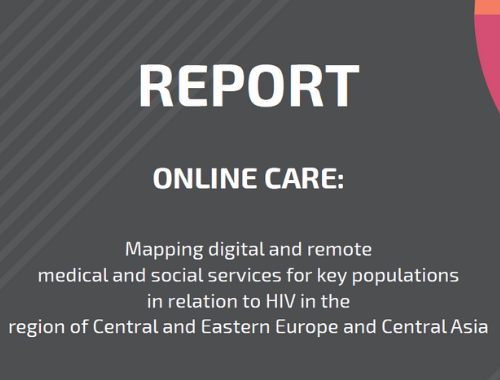
ONLINE CARE: Mapping digital and remote medical and social services for key populations in relation to HIV in the region of Central and Eastern Europe and Central Asia.

The first part focuses on mapping existing practices of online and remote services, identifying the challenges and needs of service providers to effectively implement them

Best practices in the provision of digital and remote medical and social HIV services for key populations in the region of Central and Eastern Europe and Central Asia.

The second part describes the methodology of the most common services currently provided in the countries of the CEECA region.

Practical experiences of remote and online services were presented by organisations from Moldova, Russia and Ukraine. In their presentations, speakers paid special attention to how the process of service delivery was organised, what challenges they faced and how they overcame them, what results have already been achieved.

Nikolay Unguryan presented experience of ‘Humanitarian Action’ web-based outreach in the context of harm reduction and HIV prevention for people who use drugs in Saint-Petersburg, Russia.

Andrey Chernyshev presented experience of ALLIANCE.GLOBAL of rolling out remote services such as community-based HIV, STIs and viral hepatitis testing and counselling, HIV self-testing, provision of pre-exposure prophylaxis (PrEP) and national awareness campaigns in COVID-19 context in Ukraine.

Ruslan Poverga presented the Positive Initiative’s experience on distribution of prevention materials to key groups through pharmacies and vending machines, and approaches of registering online services in the national database: “RID” in Moldova. 

The participants discussed the existing critical issues regarding the provision of online services in their respective countries and developed a list of key priorities for the next steps to be taken by the key stakeholders for successful promotion and development of quality digital and remote services in the following thematic areas:

Technical solutions and management systems

Limited technical resources, including the availability of modern PCs and tablets, constant access to high-speed mobile internet, were identified as priority issues that hampered the development of online services. Participants felt that investment in hardware should be focused on developing modern web interfaces, mobile applications and software that would facilitate the interaction between service provider and client, adviser workstations should be equipped to help ensure the privacy of both client and adviser, online service record keeping systems and client uniqueness should be automated and synchronised with other service providers, and client confidentiality should be ensured.

The need to address cyber-security issues (including the issue of security of personal data of clients and employees) was raised as a separate issue.

Among the priority issues that need to be addressed at both national and regional levels, participants mentioned the need to develop guidelines and standards for the provision of digital and remote services, which would be based on the existing evidence base, as well as standards and recommendations of key international organizations.

In the context of accounting, planning and cyber security of online services, experts participating in the meeting pointed out that most countries already have databases in which the personal data of online service customers are already stored and recorded on servers, but the problem is that these databases are not compatible with each other or are outdated, making it impossible to share or synchronise them. One technical solution would be to update and interoperate these databases, which would solve the issue of storing personal data on secure servers, record unique clients, plan services more correctly and avoid the need to create new costly databases. Where such databases do not exist in a country, the experience of other countries should be used and regional networks and initiatives could help by documenting evidence-based approaches, best practices, and sharing experiences between countries in this area.

Other priorities for technical solutions and management systems included costing of services, taking into account different approaches and needs of different key groups, as well as a flexible combination of offline and online services.

Monitoring and evaluation

Virtually all organisations record the provision of digital and remote services to some degree, but the lack of a single, generally accepted vision of what a digital and/or remote service is, where and when it begins/stops, including what components it comprises, leads to problems with customer record-keeping.

The lack of a common definition and understanding of a digital/remote service, as well as standards for its provision and a transparent and reliable system for recording digital services, makes it impossible to carry out meaningful quality control and to assess the effectiveness of digital services. For the most part, the quality of digital service delivery is assessed by customer feedback.

Participants highlighted the need to monitor online services separately from other consultations that are conducted offline, including on clients contacts and message recording. One challenging issue where investment and technical assistance is needed is in setting up costly online counselling systems in multiple languages (both national, English, French for migrants).

HIV services need to be integrated into the existing health counselling systems.

At the regional level there is need to develop recommendations or best practices on how to keep records management of digital and remote services and number of clients reached by such services. A client management system for online services should be an important priority for donor organisations and should be discussed openly with all stakeholders.

The role of regional networks and initiatives should be to document and promote best practices in logging and tracking of online services (e.g. terminal and online services tracking, use of online payment terminals, other innovative approaches), as well as to organize exchange of experiences between countries and technical assistance.

Capacity building, supervision and support for social workers providing online services.

The following key priority issues were voiced at the meeting:

  • Lack of skills among staff;
  • Difficulties in adapting staff to the online format;
  • Difficulties with balancing work online and leisure, and, as a consequence, professional burnout;

The following needs were identified as priorities:

  • New staff for organisations (e.g. IT specialist, website administrator, application administrator, chat/forum moderator, content manager/copywriter);
  • new knowledge and skills in computer literacy, working with web-based communication platforms, social networks and messengers, knowledge and use of their functionality in work, online counselling, burnout prevention, cyberbullying prevention and data security
  • skills in developing and implementing procedures and policies to ensure the protection of personal data and confidentiality of both client and service provider when delivering online services.

Terms of Reference for the consultants to conduct an overview of the progress with the implementation of the Transition Plan for the Continuation of HIV and AIDS Prevention, Treatment and Care in Bosnia and Herzegovina 2015-2017

Background

Being a partner of the Alliance for Public Health, the All-Ukrainian Network of PLWH 100% Life and other regional and national partners in the implementation of the Global Fund funded regional HIV project “Sustainability of services for key populations in Eastern Europe and Central Asia”, the Eurasian Harm Reduction Association (EHRA) is aimed at the improving the financial sustainability and allocative efficiency of HIV programs in EECA countries.

To contribute to this objective, EHRA is planning to retrospectively assess the progress with the implementation of the Transition Plan for the Continuation of HIV and AIDS Prevention, Treatment and Care in Bosnia and Herzegovina 2015-2017. It is expected that based on the results of such assessment the key civil society regional and national partners working in BiH, will be able to adjust their advocacy efforts and actions to improve the financial sustainability and allocative efficiency of HIV national programs.


Key tasks to be conducted by the consultant

 The consultant is expected to prepare a brief overview of the progress of the implementation of the Transition Plan for the Continuation of HIV and AIDS Prevention, Treatment and Care in Bosnia and Herzegovina 2015-2017. The focus of the overview should be on those programmatic areas prioritized in the Transition Plan:

  • Harm reduction activities for PWID in the context of HIV epidemic
  • HIV prevention activities for MSM
  • HIV prevention activities for prisoners
  • VCCT mobile activities (IPTCS)
  • Psychological and social support for PLWHA
  • Advocacy activities to secure sustainability of the aforementioned optimized interventions

The overview process should include the next stages:

  1. To select a set of the key actions and indicators for each of the programmatic areas (1 – 2 per area) as being provided in the Transition Plan to measure the progress with their implementation.
  2. To collect data through desk research aimed to measure progress for the selected set of actions/indicators.
  3. To conduct not less than 6 semi-structured interviews with key informants representing different sectors to compliment the desk research process and cover any data gaps. The list of key informants should be agreed with the EHRA. The questionnaire(s) for the interview should be developed by the consultant depending on those gaps in the data and information on the progress with the selected set of actions and indicators being identified during the desk research.
  4. Prepare an analytical report to summarize the findings. The outline of the report should be proposed by the consultant and agreed with EHRA. The report should include contextual sections, findings and conclusions for each of the assessed programmatic area as well as general conclusions and recommendations for key national stakeholders. The report should not exceed 20 pages and should be prepared in English.

 Timeframe

  • The desk research and interviews should be conducted by 06.12.2021
  • The draft report should be provided to the EHRA colleagues for the review and feedback by 15.12.2021.
  • The final report and all other deliverables should be submitted by 30.12.2021.

Cost of services

The total contract cost for the work of one consultant under this ToR should not exceed 2,000 USD (including all taxes).

Evaluation Criteria

An evaluation panel will assess the extent to which proposals submitted in response to this announcement meet the evaluation criteria below.

The minimum technical score is 90. Only candidates with a minimum score of 90 points out of a maximum of 100 are considered eligible for the assignment. Consultants with proven work experience in the community organization would be given a priority.

The candidate with the highest technical score that meets the requirement will be invited for negotiation of the agreement.

A consultant under this assignment is a person who carries overall responsibility for planning and conducting the study and in drafting the report. Given the essential role of this individual, she/he should possess the following knowledge and experience:

Criteria Weighting
Excellent understanding of the national HIV service delivery and funding systems as well as of the Global Fund related processes at the national level (should be clear from LoI) 20 points
Knowledge of, and access to, relevant stakeholders to be interviewed, including government officials, community members, and other experts (should be clear from LoI) 20 points
Experience of undertaking similar assessments and a strong record of adherence to evidenced-based approaches (should be clear from LoI) 20 points
Good knowledge of the BiH Transition Plan (should be clear from LoI) 20 points
Proven set of skills for interviewing, conducting a literature review, and writing (should be clear from LoI) 20 points
Total 100 points

Additionally, the consultant should have:

  • No conflict of interest (should be declared in the Letter of Interest);
  • Fluent English and national language.

How to apply

The individual consultants are invited to submit their CV and the Letter of Interest by e-mail referenced under title “Consultant to conduct the assessment of transition related commitments in Bosnia and Herzegovina to ivan@harmreductioneurasia.org by COB 11 of November 2021 24:00 EET.

CHECK – new magazine about (IL)LEGAL HIGHS

“CHECK” is a magazine for people who use drugs, experts and advocates working in the EECA region, and those who want to learn more about the drug policy and harm reduction in the region. It is published by the Eurasian Harm Reduction Association (EHRA) and the Eurasian Network of People Who Use Drugs (ENPUD).

The first issue of the magazine “Check” is dedicated to exploring the topic of new psychoactive substances, existing responses to the emergence of these substances and thoughts of peers from the EECA region.

CHECK the first issue of the magazine here ↓↓↓

If you would like to print the magazine, please, contact us: info@harmreductioneurasia.org