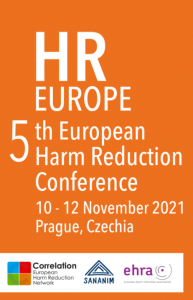
5h European Harm Reduction Conference, 2021


Eurasian Harm Reduction Association is proud of being an active partner of the conference and invites to the sessions where our organization members will make presentations or be the organizer of the session.

The whole programme of the conference You may find here 
10th of November

Plenary opening session S1

Quo vadis: the development of drug policy and harm reduction embedded
into the broader development of societies in Europe


Keynote speech:
Alexis Goosdeel, EMCDDA


Moderated discussion – Ricardo Bapiste Leite, Global Parlamentarians Network Unite
Panellists discuss drug policy developments in the European region


Panellists:
European Commission, DG Justice, tbc
Senator Lynn Ruane, Ireland, Global Parliamentarian Network Unite
Jindrich Vobrovil, Institute of Rational Addiction Policies (IRAP)
Iga Kender-Jeziorska, Civil Society Forum on Drugs
Mat Southwell, EuroNPUD

Thomas Kattau, Council of Europe, Pompidou Group
Mariam Jashi, Member of Parliament, Georgia
Massimo Barra, Rome Consensus (Red Cross)
Ganna Dovbakh, Eurasian Harm Reduction Association (EHRA)
Milutin Milosevic, Drug Policy Network South East Europe (DPNSEE)

Leverage the power of data to advocate for drug policy reform:
the Global Drug Policy Index, Matthew Wall, Head of the Department of Politics, Philosophy and International Relations, Swansea University


NOTE:

For those, who cannot attend the conference in person, we offer free live streaming of selected sessions.

https://www.harmreductionconference.eu/index.php/live-stream-register/

11th of November

Major Session 1 - Drug policy: decriminalisation – the next logical step for Europe?


Organiser: International Drug Policy Consortium (IDPC)

Chair: Eliza Kurcevič (EHRA)


The criminalisation of people who use drugs (PWUD) compounds drug-related harms and worsens health and welfare outcomes worldwide. However, a growing number of jurisdictions have decriminalised the possession of some or all drugs for personal use, including many pioneering examples from Europe.

When done in line with the evidence and partnership with PWUD, decriminalisation has the potential to improve public health and human rights dramatically. However, when sub-optimal models are created or models prejudice some drugs over others, this potential can be missed, and new problems can emerge.

Decriminalisation policies have always been permitted within international drug conventions. There has also been increased acknowledgement and promotion of this approach in recent years – most recently from a common position for the entire UN system.

In this session, the International Drug Policy Consortium (IDPC) invites you to explore the arguments for decriminalisation and some of the complex and challenging questions which remain. Europe can become a global champion for effective, ‘gold standard’ decriminalisation approaches – just as it was for harm reduction adoption decades ago.


Speakers:
Marie Nougier (IDPC)
Rui Miguel Coimbra Morais (CASO Drug Users Union)
Zaved Mahmood (OHCHR)
Tore Sørensen (Norwegian Ministry of Care and Health Services)


NOTE:

For those, who cannot attend the conference in person, we offer free live streaming of selected sessions.

https://www.harmreductionconference.eu/index.php/live-stream-register/

Parallel Session 3 – Girls power in HR2: women leadership to ensure access to Harm Reduction


Organiser: Re Generation, Eurasian Harm Reduction Association (EHRA), Metzineres, ENPUD

Chair: Irena Molnar, RE Generation


Women who use drugs are still frequently overlooked in their access to broad harm reduction meaning health and social care despite the complex harms, stigmatisation and structural violence they face. A substantial increase in gender-sensitive services is necessary to appropriately address their needs . Women who use drugs are often caught up in a vicious cycle of gender-based violence and drug use where the stress and trauma of violence perpetuate the women’s drug use, and the actions and behaviours associated with drug use expose them to heightened risk of violence  which grows tremendously due to COVID-19 restrictions, lack of job and lockdown. The reproductive and health rights, protection of standards of living and parental rights of WWUD are violated .

In response to discrimination, right violation and injustice activists from all over the Europe build the Narcofeminist movement. Narcofeminists support the ideology of FEMINISM, intersectional feminism in particular, which focuses on the intersection of different female identities and tries to look at how women and others, including trans and gender non-conforming people with different experiences face discrimination.

Womxn- lead harm reduction organisations are developing gender sensitive and gender transformative services, all over the broad Europe manage to improve access to health, legal protection and social care services for women who use drugs in case of violence – directly via improving a service of their own or building partnerships and providing capacity building for service providers.

Objective of the session is to promote womxn-lead harm reduction and activism and to provide interactive platform for experience sharing about:
·       Barriers for women to access harm reduction and ways to overcome it in different subregions of the Europe
·       Ways to counteract gender based violence toward women using drugs in the context of COVID-19
·       Gender sensitive women-lead harm reduction approaches
·       Narcofeminism and womxn activistm – building movement and finding allies among human rights and feminist movements

During the panel artist from the Metzineres team will be doing a graffiti or editing the animated movie, with the new ideas that could come from the panel


Speakers:

 ·       Why women-led initiatives and services are needed and How do they work? Aura Roig, Metzineres
·       Help impossible to ignore: basis needs and barriers in access to health and social care services and shelters in case of violence for women using drugs in the EECA region, EHRA
·       Sexism Free Night – project involving nightlife promotes, NGOs and academia – promoting safer and more egalitarian nightlife enviroments for all, Irena Molnar, RE Generation
·       Self-care and saftey protocols, supervision and mutual support for Narcofeminist leaders: mental health during Covid-19, Olga Belyaeva, ENPUD with participation from Alla Bessonova
·       Overcoming stigmatisation of women using drugs in media and social care programmes in Ukraine, Halyna Kornienko, All-Ukrainian union of women using drugs VONA

Mothers who use drugs: stigmatised and parenting, Alexandra Gurinova, Deutsche Aids Hilfe

Panel discussion

Parallel Session 4 – Monitoring and quality standards for harm reduction


OrganiserC-EHRN

Chair: Dagmar Hedrich, consulent
Katrin Schiffer, C-EHRN


Importance of civil society monitoring and Quality Standards for policymaking and advocacy


Quality Standards (QS) are crucial to improving harm reduction services’ quality and bridging the gap between science and practice. However, the extent and ways in which QS for harm reduction are known, implemented in daily practices, and monitored, varies substantially.
This session aims to introduce the different quality standards available for Harm Reduction in Europe and discuss the state or art of its implementation and monitoring, focusing on a civil society perspective. Some of the questions that we aim to debate are what types of QS are needed and valuable for the Harm Reduction field and how can we strengthen its monitoring and implementation in Europe.


Speakers:
Wouter Vanderplasschen (Gent University)
Dijana Jerkovic (Gent University, FENIQS)
Ganna Dovbakh (EHRA)
Matej Kosir (UTRIP)
Rafaela Rigoni (C-EHRN)
Peter Sarosi (CSFD)

Parallel Session 8 – NPS and mental health: humbug or an alarming situation?


Organiser: Eurasian Harm Reduction Association (EHRA)
Chair: Ganna Dovbakh, EHRA

NPS and mental health issues: humbug or an alarming situation? The EECA example.

In recent years, the growing use of new psychoactive substances has exacerbated the threats to the health of people who use drugs. These threats include overdoses, more risky drug use practices (such as frequent injections, sharing drug use equipment, etc.), the spread of HIV and other infectious diseases, and mental health issues.

Research conducted with people who use new psychoactive substances in 8 Eastern Europe and Central Asia region countries showed that one of the most common consequences among people who use new psychoactive substances is mental health issues. These include paranoia, aggression, psychosis, panic attacks, parasuicide and other mental health issues. The research respondents stated that mental health issues were rarely a case while using ‘traditional’ drugs. However, it has become an alarming issue in the last few years, especially with the use of synthetic cannabinoids and synthetic cathinones.

Even though sometimes mental health issues can occur due to drug use, it does not mean that this is the only and primary factor that can cause mental health issues.

This session aims to exchange views and discuss how to accurately respond to mental health issues among people who use new psychoactive substances without harmful consequences to the community, in the context of the current social, political, and economic situation in countries of Eastern Europe and Central Asia.

The objectives are:

  • to present findings of the studies on new psychoactive substance use in Eastern Europe and Central Asia region, focusing on mental health issues;
  • to present views and insights of practitioners working with people who use new psychoactive substances and mental health;
  • to discuss the possible interconnection between drug use and mental health issues;
  • to discuss whether some of the mental health interventions should be included in the harm reduction package; and
  • to propose public health responses and interventions for people who use new psychoactive substances.

Speakers:

  • Introduction, Ganna Dovbakh, EHRA
  • Basic Needs and Barriers in Access to HIV Related Medical and Social Services for People Who Use NPS/Stimulants in Moldova and Ukraine: focus on mental health, Zhannat Kosmukhamedova, (UNODC)
  • Use of NPS in EECA region: threat to public health or temporary trend? Eliza Kurcevic, EHRA
  • Statement on people who use drugs and mental health, Mauro Guarinieri, INPUD
  • Possible public health responses and interventions for people who use NPS. Do we need to include mental health within harm reduction package? Antons Mozalevskis, WHO Europe

Panel discussion on possible harm reduction and public health response to mental health issues among people using drugs, specifically among those who use NPS

Parallel Session 10 – Objects or subjects? Youth in drug policy and harm reduction services


Organiser: YODA
Chair: 
Iga Jeziorska, YODA

Objects or subjects? Youth in drug policy and harm reduction services

 
‘A Better Tomorrow for the Worlds’ Youth’ was the title of the 2016 United Nations General Assembly Special Session on drug policy.
Was it just a slogan?

Protecting children and youth is often a crucial argument of policymakers to adopt and implement harsh drug regulations. However, on the other hand, young people are hardly involved in a meaningful way in the policymaking processes on local, national, and international levels. Even more importantly, in many countries, the youth is one of the key vulnerable populations with limited access to various services, especially harm reduction.

This session will address the controversies mentioned above in several European countries. The participants will discuss various dimensions of the youth access to harm reduction, from legal barriers and public policy to media narrative and public opinion. Focusing on the differences between Western and East-Central European political systems, economic development and culture, and engaging the audience in a discussion, we will try to find some answers regarding the determinants of youth access to harm reduction in various regions in Europe.


Speaker:

Eliza Kurcevič (EHRA)
Teodora Jovanovic (ReGeneration)
Beatrix Vas, (Youth RISE)

Major Session 7 - Monitoring and implementation of Quality Standards in Harm Reduction in CEECA


Organiser: Eurasian Harm Reduction Association (EHRA)
Chair: Masha Plotko, EHRA


Monitoring and implementation of Quality Standards in Harm Reduction – state of art, challenges and the way forward

During the transition from the Global Fund to state funding harm reduction (HR) due to harm reduction being accepted only as HIV prevention, medical and not social service, the governments tend to support only the medical part of the program. As a result, available packages and quality of harm reduction services while transitioning are decreasing even if services are supported. Indicators accessing the efficiency of HR programs in the CEECA region are usually numeric (for example, number of clients, number of people tested, number of syringes/condoms distributed) and lack qualitative data. Accessibility, client satisfaction with the program, and the influence on the client’s life (quality of life, reintegration into society) are not part of the evaluation.

Session objectives:

  • approaches and place of community-led monitoring in ensuring access to and quality of programs;
  • sufficient funding and calculation of the unit cost based on peoples‘ needs
  • basic quality criteria and comprehensiveness of packages of harm reduction services


Pre-recorded presentations for the session:

We suggest all session participants to watch video presentations in advance to have a live discussion during the session.

  • Harm reduction during transition: changes in packages, unit costs and quality of services (Maria Plotko, EHRA)
  • Challenges of transitioning – Is Ukraine could be considered as a good example for the region? (Evgenia Kuvshinova, Ukraine) – Balkan countries: how harm reduction transited to state funding and what needs to be done next? (Irena Molnar, Serbia)
  • Community led monitoring in EECA and lessons learned (Vitalij Rabinchuk, Moldova)
  • Harm reduction where Global Fund has never been (Magdalena Bartnik, Poland)
  • Flexible harm reduction (Machteld Busz, Netherlands)
  • Role of clients and civil society in harm reduction development (Marine Gaubert, France)

Facilitated discussion with panellists 

Question 1: What is the ultimate goal of harm reduction based on quality standards (QS), IDUIT and other international recommendations: HIV or HCV response? Health and wellbeing of people using drugs? Human rights protection? Social justice?

Question 2: Who defines the actual available package of harm reduction services, and what does it depend on?

  • National standards and unit costs or quality standards
  • Needs
  • Available resources
  • Our niche or partnership with other services
  • Capacities of staff
  • What could harm reductionists do to make a package of services comprehensive?

Question 3: Role of community and civil society in monitoring and advocating for the quality of harm reduction services?

Panellists:

Machteld Busz, Netherlands
Irena Molnar, Serbia
Vitalij Rabinchuk, Moldova
Magdalena Bartnik, Poland
Marine Gaubert, France

Terms of Reference for the consultants to conduct an overview of the progress with the implementation of the Transition Plan for the Continuation of HIV and AIDS Prevention, Treatment and Care in Bosnia and Herzegovina 2015-2017

Background

Being a partner of the Alliance for Public Health, the All-Ukrainian Network of PLWH 100% Life and other regional and national partners in the implementation of the Global Fund funded regional HIV project “Sustainability of services for key populations in Eastern Europe and Central Asia”, the Eurasian Harm Reduction Association (EHRA) is aimed at the improving the financial sustainability and allocative efficiency of HIV programs in EECA countries.

To contribute to this objective, EHRA is planning to retrospectively assess the progress with the implementation of the Transition Plan for the Continuation of HIV and AIDS Prevention, Treatment and Care in Bosnia and Herzegovina 2015-2017. It is expected that based on the results of such assessment the key civil society regional and national partners working in BiH, will be able to adjust their advocacy efforts and actions to improve the financial sustainability and allocative efficiency of HIV national programs.


Key tasks to be conducted by the consultant

 The consultant is expected to prepare a brief overview of the progress of the implementation of the Transition Plan for the Continuation of HIV and AIDS Prevention, Treatment and Care in Bosnia and Herzegovina 2015-2017. The focus of the overview should be on those programmatic areas prioritized in the Transition Plan:

  • Harm reduction activities for PWID in the context of HIV epidemic
  • HIV prevention activities for MSM
  • HIV prevention activities for prisoners
  • VCCT mobile activities (IPTCS)
  • Psychological and social support for PLWHA
  • Advocacy activities to secure sustainability of the aforementioned optimized interventions

The overview process should include the next stages:

  1. To select a set of the key actions and indicators for each of the programmatic areas (1 – 2 per area) as being provided in the Transition Plan to measure the progress with their implementation.
  2. To collect data through desk research aimed to measure progress for the selected set of actions/indicators.
  3. To conduct not less than 6 semi-structured interviews with key informants representing different sectors to compliment the desk research process and cover any data gaps. The list of key informants should be agreed with the EHRA. The questionnaire(s) for the interview should be developed by the consultant depending on those gaps in the data and information on the progress with the selected set of actions and indicators being identified during the desk research.
  4. Prepare an analytical report to summarize the findings. The outline of the report should be proposed by the consultant and agreed with EHRA. The report should include contextual sections, findings and conclusions for each of the assessed programmatic area as well as general conclusions and recommendations for key national stakeholders. The report should not exceed 20 pages and should be prepared in English.

 Timeframe

  • The desk research and interviews should be conducted by 06.12.2021
  • The draft report should be provided to the EHRA colleagues for the review and feedback by 15.12.2021.
  • The final report and all other deliverables should be submitted by 30.12.2021.

Cost of services

The total contract cost for the work of one consultant under this ToR should not exceed 2,000 USD (including all taxes).

Evaluation Criteria

An evaluation panel will assess the extent to which proposals submitted in response to this announcement meet the evaluation criteria below.

The minimum technical score is 90. Only candidates with a minimum score of 90 points out of a maximum of 100 are considered eligible for the assignment. Consultants with proven work experience in the community organization would be given a priority.

The candidate with the highest technical score that meets the requirement will be invited for negotiation of the agreement.

A consultant under this assignment is a person who carries overall responsibility for planning and conducting the study and in drafting the report. Given the essential role of this individual, she/he should possess the following knowledge and experience:

Criteria Weighting
Excellent understanding of the national HIV service delivery and funding systems as well as of the Global Fund related processes at the national level (should be clear from LoI) 20 points
Knowledge of, and access to, relevant stakeholders to be interviewed, including government officials, community members, and other experts (should be clear from LoI) 20 points
Experience of undertaking similar assessments and a strong record of adherence to evidenced-based approaches (should be clear from LoI) 20 points
Good knowledge of the BiH Transition Plan (should be clear from LoI) 20 points
Proven set of skills for interviewing, conducting a literature review, and writing (should be clear from LoI) 20 points
Total 100 points

Additionally, the consultant should have:

  • No conflict of interest (should be declared in the Letter of Interest);
  • Fluent English and national language.

How to apply

The individual consultants are invited to submit their CV and the Letter of Interest by e-mail referenced under title “Consultant to conduct the assessment of transition related commitments in Bosnia and Herzegovina to ivan@harmreductioneurasia.org by COB 11 of November 2021 24:00 EET.

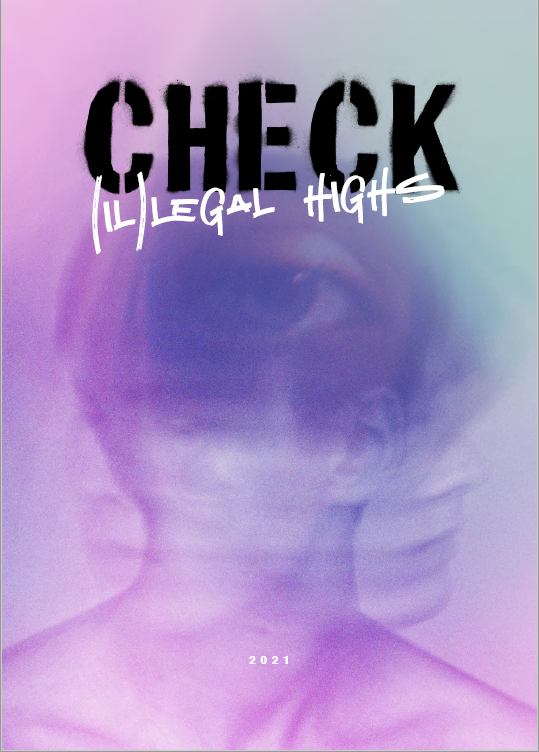
CHECK – new magazine about (IL)LEGAL HIGHS

“CHECK” is a magazine for people who use drugs, experts and advocates working in the EECA region, and those who want to learn more about the drug policy and harm reduction in the region. It is published by the Eurasian Harm Reduction Association (EHRA) and the Eurasian Network of People Who Use Drugs (ENPUD).

The first issue of the magazine “Check” is dedicated to exploring the topic of new psychoactive substances, existing responses to the emergence of these substances and thoughts of peers from the EECA region.

CHECK the first issue of the magazine here ↓↓↓

If you would like to print the magazine, please, contact us: info@harmreductioneurasia.org

Announcement of EHRA members online General meeting to elect Steering Committee member from the community of people who use drugs

Eurasian Harm Reduction Association (EHRA) (Eurazijos žalos mažinimo asociacija), registered at Gedimino pr. 45-4, Vilnius 01109, Lithuania (actual address Verkių g. 34B-701, Vilnius) announces the re-convocation of the members general meeting to elect 1 representative from the community of people who use drugs.

List of all current Steering Committee members is attached.

A list of Steering Committee members subject to rotation in the General meeting:

  1. Alexander Levin (community of PWUD)

Schedule of elections:

  • From 29th October to 12th November 2021 – nomination process (2 weeks). Candidates are submitting their applications to participate in the Steering Committee elections.
  • From 15th to 28th November 2021 – online voting to elect Steering Committee member from the community of PWUD.
  • 29th November 2021 – announcement of the results.

We are inviting all EHRA members from the community of people who use drugs from all the regions to submit applications to become a member of the Steering Committee until 12th November 2021. Candidates’ applications are filled in online: https://forms.gle/SeLm552uiZoqa48t9

The requirements for the candidates are: 

    1. be a member of EHRA;
    2. demonstrate readiness and ability to work responsibly and actively as a Steering Committee member;
    3. follow the principles listed in the Association Steering Committee Regulations;
    4. in case of representative elections from the community of people who use drugs – to live within Association geographical region and to be an individual who is a former or current person who use drugs and can represent interests of the community of people who use drugs;
    5. to avoid a potential conflict of interests, candidates cannot be representatives of Association’s donor organizations.

ATTENTION!

Representatives of the community of people who use drugs represent the Association’s whole geographical area and should be from different countries. Thus, as there is a representative from community of people who use drugs from Moldova, candidates from Moldova cannot apply.

If you have any questions, please do not hesitate Secretary of the General meeting Eliza Kurcevic, on e-mail: members@harmreductioneurasia.org

EXTENDED: EHRA is looking for a video production crew or individual consultant to create video materials

RFP Number EHRA-09-02
RFP Title Video crew
RFP Closing Date and time: 24:00 EET on October 27, 2021
Proposal Submission Address: info@harmreductioneurasia.org

 Background

Eurasian Harm Reduction Association (EHRA) is a non-for-profit public membership-based organization since 2017, operating in 29 countries of Central and Eastern Europe and Central Asia (CEECA). EHRA mission is to actively unite and support communities and civil societies to ensure the rights and freedoms, health, and well-being of people who use psychoactive substances in the CEECA region. EHRA’s Secretariat is based in Vilnius, Lithuania.

Scope of Services

EHRA from time to time needs to create different video material – informational or advocacy video, video-reports, educational videos etc. Purpose of the video materials is to educate, represent, inform different kind of audiences about EHRA activities, achievements, projects. For video production EHRA is looking for the pool of crew (individual consultant or organization) to create video materials. A pool of winners will be selected.

 General Conditions

  • Language of video materials is English or Russian with subtitles English or Russian.
  • Duration may vary from 3-4 minutes to 30-40 minutes depending on the request.
  • Filming onsite and remoted ensuring the Full HD/4K quality
  • Video editing according to contest, stylistic and visual guidelines provided by EHRA staff including infographics and visual effects
  • Video teaser/intro production
  • Ensuring audio files of edited final video versions are available to EHRA
  • Preparation and implementation of subtitles for the video (Russian and English)
  • The visual solutions for the video must be technologically and creatively professional
  • The video must be designed and produced in a visually appealing and interesting way, using video, audio, modern technological or directorial solutions
  • Upon completion of the services, the Supplier shall hand over to EHRA all footage used and unused for the production of the information video clip
  • All copyrights of video are transferred to EHRA

Technical parameters of video

  • 4k resolution;
  • 120 fps,;
  • Storage of documents in raw format.
  • Additional equipment must be used to produce dynamic and high quality video
  • For video editing, the script shall be designed to allow dynamic change of shots
  • Sound quality requirements: the clips must have a high sound quality (at least 96 kHz)
  • sampling rate and 24-bit audio resolution). Synchronisation between video and audio must be ensured, and additional audio tracks
  • Image quality requirements for video production: shading and tonality must be present.
  • All content produced must be transmitted to EHRA in digital formats, ideally in the best possible quality.
  • The video must be recorded in mkv, avi, mp4 and mpeg formats so that EHRA does not encounter problems in making the video clips public on its own resources. The main dissemination of the video will be by means of online communication and must therefore be ensured a high recording quality suitable for broadcasting the clips in large format.
  • The video should be transmitted to EHRA in digital format allowing the editing of individual video and audio segments. Video must be submitted without security codes (unlocked).

Evaluation criteria

A two-stage procedure will be utilized in evaluating the proposals:

  • evaluation of the previous experience (portfolio) via technical criteria – 80% in total evaluation
  • comparison of the costs (best value for money) – 20% in total evaluation.

Cost evaluation is only undertaken for technical submissions that score a minimum 70 points out of a maximum of 100 as a requirement to pass the technical evaluation. A proposal which fails to achieve the minimum technical threshold will not be considered further.

To assess submitted applications, the following technical criteria will be used (80%):

Criteria
Vast experience of location and remoted shooting reflected in portfolio 30 points
Experience in organization of filming process 30 points
Experience in video editing, previous work with captions and graphic elements reflected in portfolio 30 points
A sense of taste and style 10 points
Total 100 points

Cost proposal (20%):

EHRA will allocate same importance to the provided portfolio and recorded experience as to the cost of the services. The cost proposal will be evaluated in terms of best value-for money to EHRA in EUR, price and other factors considered.

For the proper cost evaluation please provide budget needed to prepare a 4 minutes video according to the requirements listed below:

Requirements/expectations

  • Language of video materials is English or Russian with English or Russian subtitles.
  • Duration – 4 minutes.
  • Filming onsite and remoted ensuring the Full HD/4K quality. Video should consist of 11 short, remoted and interviews with 4-5 drawn infografics, music and recorded sound of narrator.
  • Video editing according to contest, stylistic and visual guidelines provided by EHRA staff including infographics and visual effects. Some parts of the video must be voiced by narrator. All the video needs subtitles as it sould be understandable for English and Russian speaking audience.
  • Time limits for preparation – 2 weeks.

This announcement shall not be construed as a contract or a commitment of any kind. This request for proposals in no way obligates EHRA to award a contract, nor does it commit EHRA to pay any cost incurred in the preparation and submission of the proposals.

How to apply

To be eligible as a EHRA’s service provider or consultant, any organization or individual must comply with the Eurasian Harm Reduction Association Code of Ethics which you can find at the following link: https://old.harmreductioneurasia.org/ehra-code-of-ethics/

Terms of payment and other conditions same as a final timeline will be indicated in the agreement which EHRA will sign with the winners. For each assignment separate Technical Requirements as well as cost will be agreed on. On the basis of the results of the tender, EHRA reserves the right to award the contract to a number of consultants with the highest scores and fulfilling the required criteria.

Applicants must submit the following documents:

  • for individual consultant: CV, prices in EUR (shooting and video editing per video gross) and submit your portfolio by e-mail referenced under title “Video crew”;
  • for organization: letter of interest with prices in EUR (shooting and video editing per video gross) and submit your portfolio by e-mail referenced under title “Video crew”;

Please submit your proposal to the info@harmreductioneurasia.org .

In the subject line of your e-mail please indicate the RFP number and your name. Otherwise, the application will not be considered.

Georgia: Benchmarking sustainability of the HIV response among Key Populations in the context of transition from Global Fund support to domestic funding

The assessment of the fulfilment of key public commitments with respect to the sustainability of the HIV response for key populations in the context of transition from Global Fund support in Georgia was conducted based on the Methodological Guide and Transition Monitoring Tool (TMT) developed by EHRA . The assessment aims to assist key affected communities to stay informed and engaged in the monitoring of the transition process and to thereby advocate for the sustainability of national HIV responses.

Findings of Transition Monitoring:


Domain: Results, Impact and Outcome: The transition progress achievement score for three commitments was above 100% which indicates that Georgia has overachieved its goal to control the spread of HIV among the general population and to reduce HIV incidence and AIDS-related mortality.  However, progress achieved in terms of containing the HIV epidemic among key populations was impossible to monitor given that no integrated biological-behavioural survey (IBBS) among key populations were conducted during 2019-2020.

Health Domain 1: Financing: The average score for fulfilling commitments under the Financing Domain was set at 67% which implies that average progress was achieved by the government. However, the reliability of the financial data sources used may be questionable. Some indicators measuring the commitments may not capture the real picture in terms of increased financing; while the percentage share of public funding out of total HIV spending has been on the rise, government spending expressed in absolute numbers has declined over the last three years.

Health Domain 2: Drugs, supplies and equipment: The Government has achieved significant progress (with an achievement score of 85%) to ensure the uninterrupted supply of ARVs, OAT medications as well as HIV prevention commodities. However, the ARV prices procured in Georgia remain much higher than reference pricing. Taking into account the budgetary limitations for the healthcare system in Georgia, it can be assumed that overspending on ARVs may limit the fiscal space available for the HIV response. Thus, it seems to be critical to optimise the procurement of ARV drugs to avoid overspending and to make sure that limited resources available for the HIV response in the country are spent most efficiently. In addition, a few episodes of stock-outs of HIV prevention commodities were observed in 2020 that may have been caused by external factors, namely the COVID-19 pandemic and restrictions in transportation and international shipping.

Health Domain 3: Service provision: A high degree of progress in fulfilling the commitments to increase access to HIV services for key populations was documented, with an overall achievement score of 98%. However, this assessment does not provide evidence that no risk to sustainability of services can be expected. The Global Fund support still plays a critical role in expanding or maintaining the scope and scale of HIV essential services provided to key populations, including PLHIV, MSM, PWID, and SW. So far, limited evidence (if any) is available to believe that low-threshold services run by civil society organisations (CSOs), specifically needle and syringe programmes (NSP), community outreach, care and support services, including material support services for key populations, will be sustained beyond the cycle of Global Fund support. There is a declared political commitment from the government about sustainability of all components of the HIV prevention programme, though this declaration has not yet been substantiated with commensurate funding for certain programmatic areas.

Health Domain 4: Governance: A fairly low degree of progress has been achieved by the Government in terms of good governance, with a transition progress achievement score of 27%. The current government, similar to the previous one, has failed to amend punishment-based drug legislation and to create a conducive legal environment. This may jeopardise the sustainability of harm reduction services that currently operate without any legal basis. Adoption, and approval, of HIV prevention service standards for key populations has not been fully realised: only service guidelines had been approved in 2020; approval of service protocols has been delayed; and the costing of HIV prevention services has not yet been developed.

Health Domain 5: Data and information: There is a declared political commitment from the Government about ensuring the sustainability of the second-generation surveillance studies among key affected populations; however, no investments have been made by the Government until now to progressively absorb the cost of IBBS/population size estimate (PSE) studies. Perhaps the Government has been slow to invest in research because there has been constant support from the Global Fund to cover the cost of IBBS and PSE among key population groups.

Health Domain 6: Human resources (HR): No progress (achievement score of 0%) has been achieved. It seems that addressing the challenges related to human resources in health, including in the HIV field, has not been perceived as a priority issue by the government. There were few interventions proposed in the Transition Plan, such as adopting a policy for the continuous professional development of human resources for HIV/AIDS; defining professional competencies and qualification frameworks for various specialists; and accreditation/re-certification procedures, etc. It should be noted that none of these objectives has been realised up to now.

This document should be used to assist CSO’s, key affected communities and partners to remain more informed and engaged in the monitoring of the transition process from donor to domestic funding and to thereby advocate for the implementation of activities that will lead to the sustainability of the national HIV response

Download document

Say “Know” to Your stuff!

People by their nature are inclined to experiment, to try new things, approaches, feelings, new states of being and mind. No wonder that one of the “tools” used for this purpose is different substances. More new psychoactive substances appear annually.

As EHRA researches conducted in EECA countries show, the increasing use of NPS has led to new threats for health of people who use drugs – including overdoses, psychotic reactions, high HIV risks due to multiple injections and increased number of sexual contacts. However, in many countries service providers such as harm reduction, drug treatment programs and ambulance services are not ready or are not well equipped with information (and tools) on how to provide people who use NPS  with quality support and counselling”, – stresses EHRA Senior Program Officer Eliza Kurcevič.


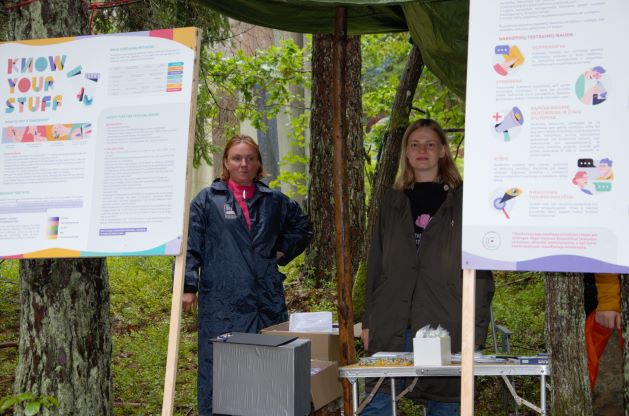
The third time EHRA team has joined music festival Yaga in Lithuania with harm reduction activities that took place on 5-9 of August. Previous experience at the festival has shown that participants are very much interested in getting the science based, understandable information on how to protect themselves and others in different situations related to consumption. There are some key, golden rules:

– know what substance you use.

– know the health risks and consequences related to the use of that substance

–know how to respond to the overdoses or how to make human life safer in the event of an overdose

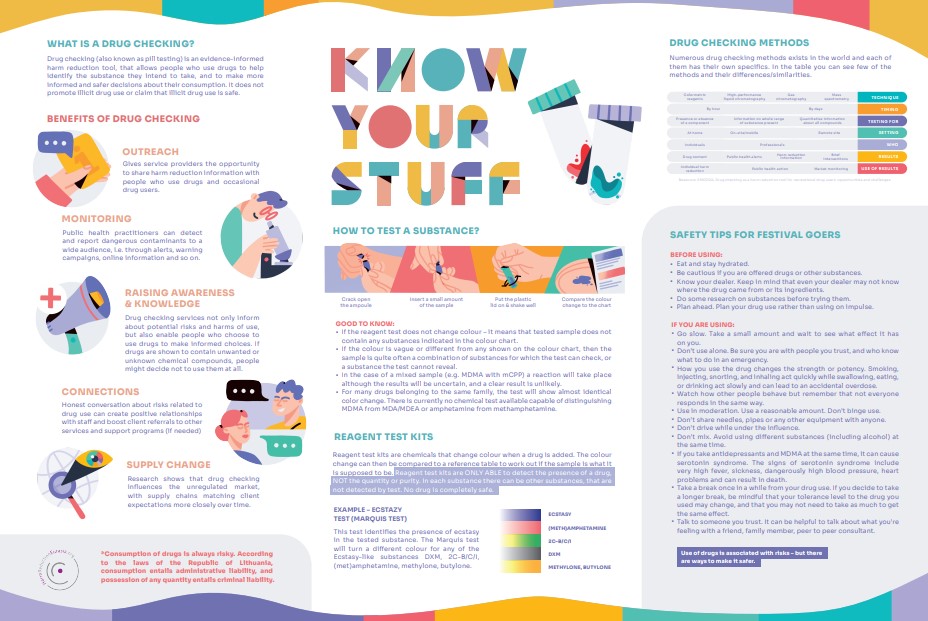
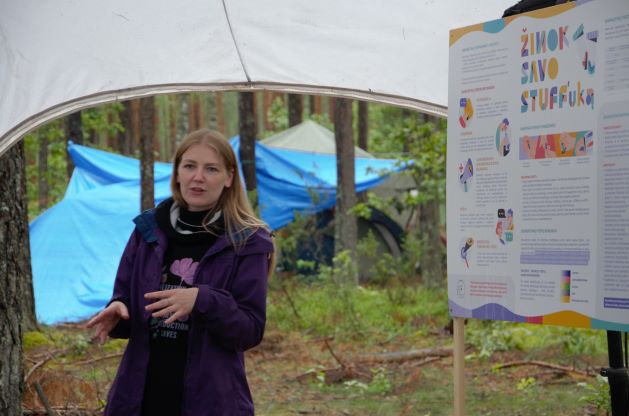
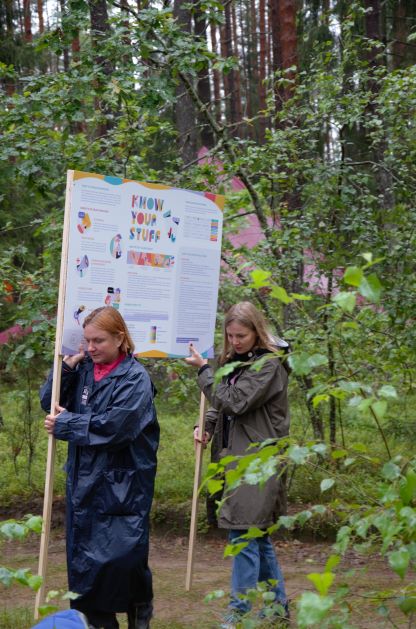
This year EHRA team concentrated on the first listed issue and prepared information campaign “Know Your Stuff”.

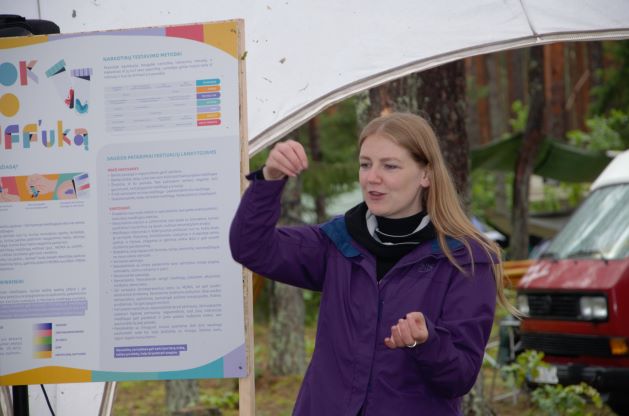
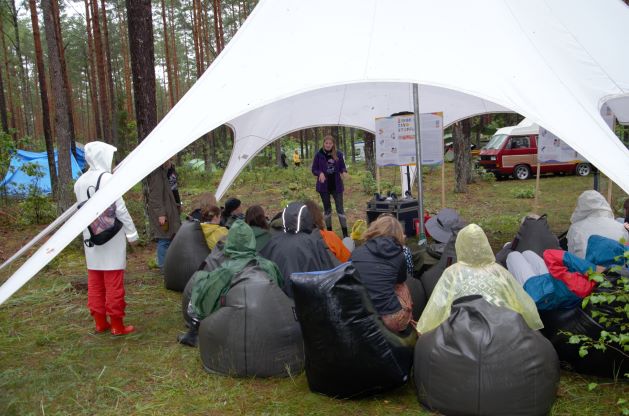
It included several activities. Firstly, workshop called “Know Your Stuff- Drug Checking Works”, which was led by Eliza Kurcevič. Discussion attracted festival participants and they get involved into interactive discussion about risks and harm reduction approaches to different psychoactive substances. Participants discussed what is drug checking, what are the benefits of it. 

Drug checking (also known as pill testing) is an evidence-informed harm reduction tool, that allows people who use drugs to help identify the substance they intend to take, and to make more informed and safer decisions about their consumption. It does not promote illicit drug use or claim that illicit drug use is safe. 

BENEFITS OF DRUG CHECKING 

  1. Gives service providers the opportunity to share harm reduction information with people who use drugs and occasional drug users. 
  2. Public health practitioners can detect and report dangerous contaminants to a wide audience, i.e. through alerts, warning campaigns, online information and so on. 
  3. RAISING AWARENESS AND KNOWLEDGE.Drug checking services not only inform about potential risks and harms of use, but also enable people who choose to use drugs to make informed choices. If drugs are shown to contain unwanted or unknown chemical compounds, people might decide not to use them at all. 
  4. Honest conversation about risks related to drug use can create positive relationships with staff and boost client referrals to other services and support programs (if needed) 
  5. SUPPLY CHANGE.Research shows that drug checking influences the unregulated market, with supply chains matching client expectations more closely over time. 

In addition to that EHRA team has distributed reagent tests for those who wanted to check psychoactive substances, talked to all interested about different approaches of harm reduction and pointing out safety tips for festival goers. 

SAFETY TIPS FOR FESTIVAL GOERS 

Use of drugs is associated with risks – but there are ways to make it safer. 

Before using: 

  • Eat and stay hydrated.
  • Be cautious if you are offered drugs or other substances.
  • Know your dealer. Keep in mind that even your dealer may not know where the drug came from or its ingredients.
  • Do some research on substances before trying them.
  • Plan ahead. Plan your drug use rather than using on impulse.

If you are using: 

  • Go slow. Take a small amount and wait to see what effect it has on you.
  • Don’t use alone. Be sure you are with people you trust, and who know what to do in an emergency.
  • How you use the drug changes the strength or potency. Smoking, injecting, snorting, and inhaling act quickly while swallowing, eating, or drinking act slowly and can lead to an accidental overdose.
  • Watch how other people behave but remember that not everyone responds in the same way.
  • Use in moderation. Use a reasonable amount. Don’t binge use.
  • Don’t share needles, pipes or any other equipment with anyone.
  • Don’t drive while under the influence.
  • Don’t mix. Avoid using different substances (including alcohol) at the same time.
  • If you take antidepressants and MDMA at the same time, it can cause serotonin syndrome. The signs of serotonin syndrome include very high fever, sickness, dangerously high blood pressure, heart problems and can result in death.
  • Take a break once in a while from your drug use. If you decide to take a longer break, be mindful that your tolerance level to the drug you used may change, and that you may not need to take as much to get the same effect.
  • Talk to someone you trust. It can be helpful to talk about what you’re feeling with a friend, family member, peer to peer consultant. 

*Consumption of drugs is always risky. According to the laws of the Republic of Lithuania, consumption entails administrative liability, and possession of any quantity entails criminal liability

REQUEST FOR PROPOSALS: EHRA is looking for a video production crew or individual consultant to create video materials

RFP Number EHRA-09-02
RFP Title Video crew
RFP Closing Date and time: 24:00 EET on October 10, 2021
Proposal Submission Address: info@harmreductioneurasia.org

 Background

Eurasian Harm Reduction Association (EHRA) is a non-for-profit public membership-based organization since 2017, operating in 29 countries of Central and Eastern Europe and Central Asia (CEECA). EHRA mission is to actively unite and support communities and civil societies to ensure the rights and freedoms, health, and well-being of people who use psychoactive substances in the CEECA region. EHRA’s Secretariat is based in Vilnius, Lithuania.

Scope of Services

EHRA from time to time needs to create different video material – informational or advocacy video, video-reports, educational videos etc. Purpose of the video materials is to educate, represent, inform different kind of audiences about EHRA activities, achievements, projects. For video production EHRA is looking for the pool of crew (individual consultant or organization) to create video materials. A pool of winners will be selected.

 General Conditions

  • Language of video materials is English or Russian with subtitles English or Russian.
  • Duration may vary from 3-4 minutes to 30-40 minutes depending on the request.
  • Filming onsite and remoted ensuring the Full HD/4K quality
  • Video editing according to contest, stylistic and visual guidelines provided by EHRA staff including infographics and visual effects
  • Video teaser/intro production
  • Ensuring audio files of edited final video versions are available to EHRA
  • Preparation and implementation of subtitles for the video (Russian and English)
  • The visual solutions for the video must be technologically and creatively professional
  • The video must be designed and produced in a visually appealing and interesting way, using video, audio, modern technological or directorial solutions
  • Upon completion of the services, the Supplier shall hand over to EHRA all footage used and unused for the production of the information video clip
  • All copyrights of video are transferred to EHRA

Technical parameters of video

  • 4k resolution;
  • 120 fps,;
  • Storage of documents in raw format.
  • Additional equipment must be used to produce dynamic and high quality video
  • For video editing, the script shall be designed to allow dynamic change of shots
  • Sound quality requirements: the clips must have a high sound quality (at least 96 kHz)
  • sampling rate and 24-bit audio resolution). Synchronisation between video and audio must be ensured, and additional audio tracks
  • Image quality requirements for video production: shading and tonality must be present.
  • All content produced must be transmitted to EHRA in digital formats, ideally in the best possible quality.
  • The video must be recorded in mkv, avi, mp4 and mpeg formats so that EHRA does not encounter problems in making the video clips public on its own resources. The main dissemination of the video will be by means of online communication and must therefore be ensured a high recording quality suitable for broadcasting the clips in large format.
  • The video should be transmitted to EHRA in digital format allowing the editing of individual video and audio segments. Video must be submitted without security codes (unlocked).

Evaluation criteria

A two-stage procedure will be utilized in evaluating the proposals:

  • evaluation of the previous experience (portfolio) via technical criteria – 80% in total evaluation
  • comparison of the costs (best value for money) – 20% in total evaluation.

Cost evaluation is only undertaken for technical submissions that score a minimum 70 points out of a maximum of 100 as a requirement to pass the technical evaluation. A proposal which fails to achieve the minimum technical threshold will not be considered further.

To assess submitted applications, the following technical criteria will be used (80%):

Criteria  
Vast experience of location and remoted shooting reflected in portfolio 30 points
Experience in organization of filming process 30 points
Experience in video editing, previous work with captions and graphic elements reflected in portfolio 30 points
A sense of taste and style 10 points
Total 100 points

Cost proposal (20%):

EHRA will allocate same importance to the provided portfolio and recorded experience as to the cost of the services. The cost proposal will be evaluated in terms of best value-for money to EHRA in EUR, price and other factors considered.

For the proper cost evaluation please provide budget needed to prepare a 4 minutes video according to the requirements listed below:

Requirements/expectations

  • Language of video materials is English or Russian with English or Russian subtitles.
  • Duration – 4 minutes.
  • Filming onsite and remoted ensuring the Full HD/4K quality. Video should consist of 11 short, remoted and interviews with 4-5 drawn infografics, music and recorded sound of narrator.
  • Video editing according to contest, stylistic and visual guidelines provided by EHRA staff including infographics and visual effects. Some parts of the video must be voiced by narrator. All the video needs subtitles as it sould be understandable for English and Russian speaking audience.
  • Time limits for preparation – 2 weeks.

This announcement shall not be construed as a contract or a commitment of any kind. This request for proposals in no way obligates EHRA to award a contract, nor does it commit EHRA to pay any cost incurred in the preparation and submission of the proposals.

How to apply

To be eligible as a EHRA’s service provider or consultant, any organization or individual must comply with the Eurasian Harm Reduction Association Code of Ethics which you can find at the following link: https://old.harmreductioneurasia.org/ehra-code-of-ethics/

Terms of payment and other conditions same as a final timeline will be indicated in the agreement which EHRA will sign with the winners. For each assignment separate Technical Requirements as well as cost will be agreed on. On the basis of the results of the tender, EHRA reserves the right to award the contract to a number of consultants with the highest scores and fulfilling the required criteria.

Applicants must submit the following documents:

  • for individual consultant: CV, prices in EUR (shooting and video editing per video gross) and submit your portfolio by e-mail referenced under title “Video crew”;
  • for organization: letter of interest with prices in EUR (shooting and video editing per video gross) and submit your portfolio by e-mail referenced under title “Video crew”;

Please submit your proposal to the info@harmreductioneurasia.org .

In the subject line of your e-mail please indicate the RFP number and your name. Otherwise, the application will not be considered.

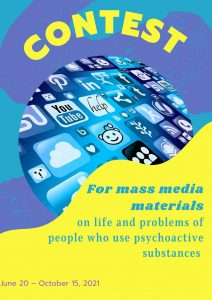
EXTENDED: Contest of mass media materials on life and problems of people who use psychoactive substances

TO THE ATTENTION OF MASS MEDIA IN THE REGION OF CENTRAL AND EASTERN EUROPE AND CENTRAL ASIA (CEECA) 

in the framework of “Chase the virus, not people!” campaign** 

Background 

More than 3 million people who use psychoactive substances live in the countries of Central and Eastern Europe and Central Asia (CEECA). The CEECA region has the fastest-growing HIV epidemic in the world and high rates of hepatitis C and overdose mortality. Although harm reduction programs to some extent are available in 28 out of 29 countries in the CEECA region, the scope, quality, accessibility, and sustainable financing of these programs are so low in many CEECA countries that their impacts on the public have been insignificant.  

Many countries within CEECA have a political environment that maintains repressive drug policies, leading to stigma, discrimination, criminalization and imprisonment of people who use psychoactive substances, which are the major causes of hatred and inhumanity rooted in the society in relation to people who use drugs. Drug use or drug addiction diagnosis should not be the grounds for deprivation or restriction of political, economic, social and cultural rights. Years of anti-drug policies implementation and criminalization have led to systematic violations of the rights of millions of people who use drugs, including their right to life.  

In anticipation of the World Drug Day, June 26, and the International Overdose Awareness Day, August 31, Eurasian Harm Reduction Association (EHRA) encourages all responsible mass media representatives, bloggers, social media activists to take part in the Contest of media materials dedicated to the life and problems of people who use psychoactive substances.  

The aim of the contest:  

to encourage materials in traditional media channels (printing, radio, TV) as well as in social media (Facebook, Instagram, Twitter, YouTube etc.) on influence of stigma, discrimination and criminalization on the lives of people who use psychoactive substances in CEECA countries to increase public awareness and stimulate actions to overcome those challenges.  

Assignment for mass media: 

to create an article / post / video / programme / podcast / investigation / interview, etc. to address stigma, discrimination or criminalization of people who use psychoactive substances in your city or country.  

Contest timeline:  

  • Materials developed for the contest should be posted/published/aired in the period of June 20 – October 15, 2021.
  • Materials (relevant links and audience coverage) should be sent to jurgita@harmreductioneurasia.org no later than October 29, 2021.
  • Contest results announcement – December 1, 2021.

Contest is conducted in 4 media categories:  

  1. Printed media (newspapers/magazines/websites)
  2. TV (including online TV and vlogs)
  3. Radio 
  4. Social Media

The materials may be dated (but not necessarily) to June 26 (World Drug Day) and August 31 (International Overdose Awareness Day).   

Contest awards*:  

3 winners in each media category will be awarded the prize:  

1st place – 1000USD  

2nd place – 750 USD 

3rd place – 500 USD  

The contest committee will evaluate the contestants’ materials considering the following criteria:  

  • creativity(the author’s creative work) (25 points) 
  • originality(uniqueness of the topic, story or the way the topic is presented) (25 points) 
  • the language of the text or the visual expression (clarity, tolerance, expressive features) (10 points) 
  • the relevance of the material (15 points) 
  • the reach of the material (unique readers, watchers, listeners, likes, shares, achieved audience overall) (25 points) 

Language: all materials are welcome in a national language.  

Only materials expressing neutral and tolerant attitude and using appropriate not stigmatizing language will be allowed to participate in the contest. Please review the glossary of recommended language use in English and Russian and EHRA Drug Policy Position for reference.  

For all interested in the Contest and wishing to learn more or to ask questions an online Q&A session will be organized on 29th of September at 12:00. Please, register for the Webinar here: https://cutt.ly/QElSPtA 

Jury: led by Eurasian Harm Reduction Association the jury will include national partners from countries, participating in the contest.  

Prizes to be awarded in each media category*: 

4 First places – 4000 USD (1000 USD per material) 

4 Second places – 3000 USD (750 USD per material) 

4 Third places – 2000 USD (500 USD per material) 

 * The amount includes all taxes. The winner is solely responsible for the calculation and payment of all taxes and fees which he / she / they is required to pay according to the state law of which he / she / they is a citizen or resident.

**About the campaign “Chase the virus, not people!” 

Eastern Europe and Central Asia (EECA) remains the only region in the world where new HIV cases continue to rise, and AIDS-related deaths are still high. To attract worldwide attention to the barriers that key communities and people living with HIV in the region face to access HIV prevention, treatment and care, the regional communities’ networks have joined forces in the campaign “Chase the virus, not people!” to represent interests of key populations affected by HIV: people living with HIV, women living with HIV, youth and teenagers, affected by HIV, people who use drugs, sex workers, men who have sex with men, trans* people.  

Launched at the International AIDS 2018 Conference in Amsterdam in 2018 the campaign continues through national initiatives, bringing together new partners and supporters to raise awareness of key populations’ problems and reduce stigma and discrimination in society.

Campaign coordinator – Eurasian Harm Reduction Association (EHRA) 


Announcement of EHRA members online General meeting to elect Steering Committee member from the community of people who use drugs

Eurasian Harm Reduction Association (EHRA) (Eurazijos žalos mažinimo asociacija), registered at Gedimino pr. 45-4, Vilnius 01109, Lithuania (actual address Verkių g. 34B-701, Vilnius) announces the re-convocation of the members general meeting to elect 1 representative from the community of people who use drugs.

List of all current Steering Committee members is attached.

A list of Steering Committee members subject to rotation in the General meeting:

  1. Alexander Levin (community of PWUD)

Schedule of elections:

  • From 20th September to 3rd October 2021 – nomination process (2 weeks). Candidates are submitting their applications to participate in the Steering Committee elections.
  • From 4th to 17th October 2021 – online voting to elect Steering Committee member from the community of PWUD.
  • 18th October 2021 – announcement of the results.

We are inviting all EHRA members from the community of people who use drugs from all the regions to submit applications to become a member of the Steering Committee until 3rd October 2021. Candidates’ applications are filled in online: https://forms.gle/Pe2nDbw6UsCDK2x47

The requirements for the candidates are: 

    1. be a member of EHRA;
    2. demonstrate readiness and ability to work responsibly and actively as a Steering Committee member;
    3. follow the principles listed in the Association Steering Committee Regulations;
    4. in case of representative elections from the community of people who use drugs – to live within Association geographical region and to be an individual who is a former or current person who use drugs and can represent interests of the community of people who use drugs;
    5. to avoid a potential conflict of interests, candidates cannot be representatives of Association’s donor organizations.

ATTENTION!

Representatives of the community of people who use drugs represent the Association’s whole geographical area and should be from different countries. Thus, as there is a representative from community of people who use drugs from Moldova, candidates from Moldova cannot apply.

If you have any questions, please do not hesitate Secretary of the General meeting Eliza Kurcevic, on e-mail: members@harmreductioneurasia.org