To everyone. Urgently.
NGO “Young Wave” (Lithuania) participated in the call for proposals for prevention projects, social information campaigns, scientific research projects, announced by the State Public Health Strengthening Fund. The application was aimed at raising awareness of the risks of the psychoactive substance use and harm reduction among festival and party goers, thereby encouraging the target group to make responsible decisions regarding the use of the psychoactive substances and health. What is more, application aimed to raise awareness about drug use, harm reduction among festivals and parties organizers and staff, as well to break the stereotypes about drug use in the society.
The application received 0 points, thus NGO “Young Wave” sent the request to justify the tender results and received response from the State Public Health Strengthening Fund under the Ministry of Health, regarding the harm reduction services promotion for non-injecting drug users in Lithuania.
If you want to hear the truth too – let’s act together!
By August 18, please sign a Joint Statement to the Minister of Health of the Republic of Lithuania. Be sure to include the name of your organization and the country. Eliza Kurcevic (EHRA) will collect your confirmations of your support to E-mail eliza@harmreductioneurasia.org.
Show your support!
EHRA Team
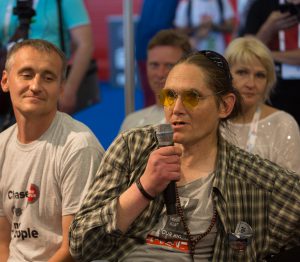 Kestutis Butkus is a well-known activist, one of the first from the community of people, who use drugs in Lithuania. 8 years ago, his right to health was violated by non-provision of opioid substitution treatment (OST) in prison (at that time, Lithuania remained one of the few EU countries where OST was inaccessible to people in prisons). Kestutis chose the path of struggle against the system and not because of, but rather in spite of, became one of the few (alas), who managed to influence the Law. Since 2018, opioid substitution therapy has been introduced in Lithuanian prisons, but we need to remember – this is only the beginning of a long way* …
 – After eight days I was transferred to another prison – Provinishki (80 km from Vilnius – comment by EHRA). Once there I also immediately mentioned that I was on substitution therapy. The doctor’s answer was: “Don’t complain about your addiction. It’s dissoluteness, not illness.” I understood everything… I said: “I don’t need anything. Just prescribe me some aspirin to thin the blood” (I have a heart valve). They gave it to me, along with “cockroaches”. I was left in a one-person cell for fourteen days. All by myself, having bouts of insomnia…
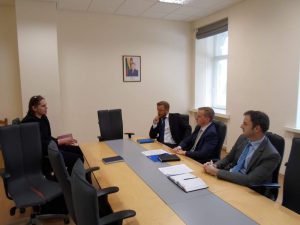 – The ECHR wrote to my lawyers asking what was going on. Lawyers reported that the Ministry of Health had taken the case to court. Upon learning that Strasbourg suspended the case pending clarification.
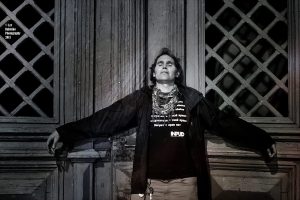 – I’ll give you another example. They opened the so-called rehabilitation centre for drug users at a prison in Alytus (town in Lithuania – comment by EHRA.) They constructed a building for it especially, furnished it with everything new. Guess who’s moved in there? The entire bunch of the prison’s top dogs, inmates who have nothing to do with the rehabilitation program. Furthermore, they were selling drugs from there for a few years. You think the prison authorities didn’t know that? After all, it’s no secret that drugs are available in prisons at crazy prices. How could such amounts of drugs filter their way into institutions without some help on the inside, from the staff? –
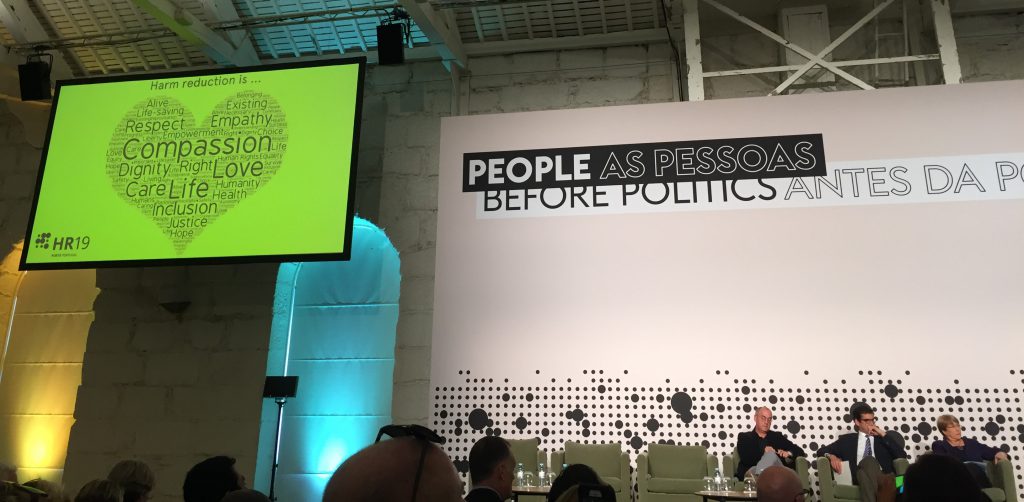
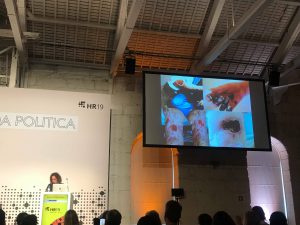 As Nanna Gotfredsen from the
  A month later, another drug policy conference took place in Paris, this time bringing together scholars from all over the world. It was the 13th annual conference of the
  Due to “insufficient methodological tools to conduct community-based research,” community involvement in the research was presented as a new trend. The reasons why researchers ‘should’ collaborate with peers listed on one of the slides were:
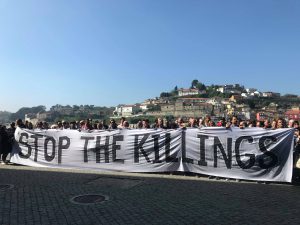 To conclude, the two conferences got me into thinking about why although they shared the messages and general conceptual frameworks, they did not share the audience. Stigma related to drugs is divisive even for people who use drugs, one can see the split between “bad drugs” and “good drugs”, for example, socially acceptable upper-class party use contrasted with “those people in the street we have nothing to do with.” We see separate conferences for harm reduction, psychedelic, cannabis and ayahuasca users, cultivators, scientists and activists, doctors and police, palliative care and access to pain management. Repressive drug policies affect the quality of life and safety of every person, and can be used as a way of controlling the population and implementing political repressions just the way we
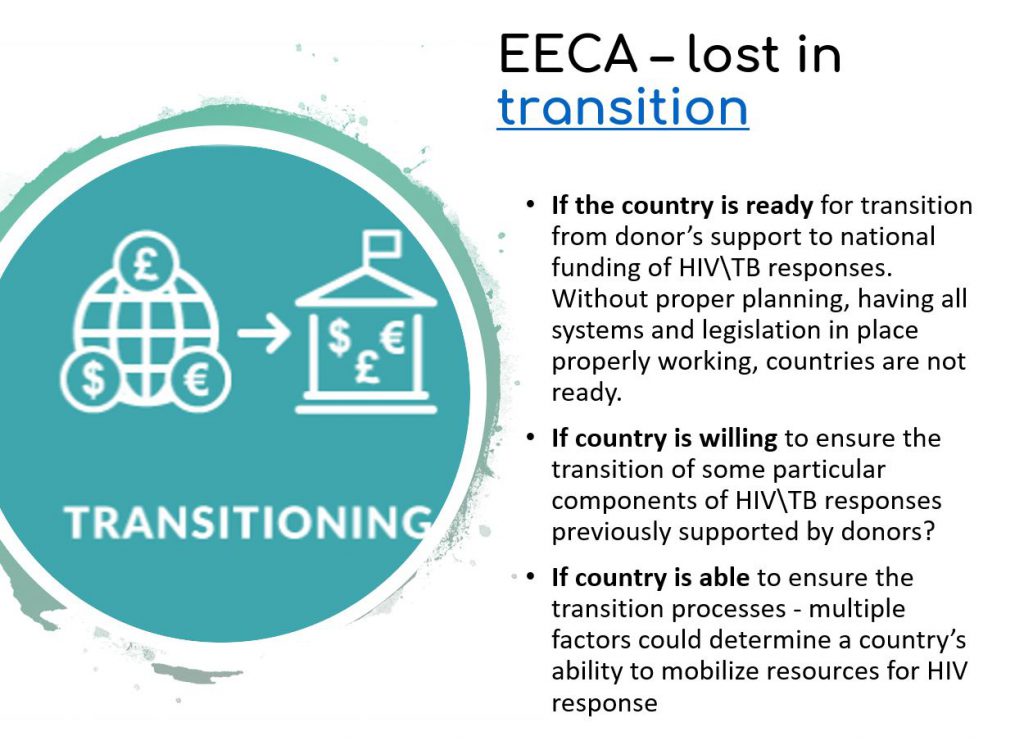
 Russia is an Upper-middle income country with high HIV disease burden, a member of G-20. It’s not on the Organization for Economic Co-operation and Development’s (OECD) Development Assistance Committee (DAC) List of Official Development Assistance (ODA) recipients. Normally this means that a country would not be eligible for any GF HIV funding. But there is a provision in the GF eligibility policy formerly known as “NGO rule”. According to this provision “Upper-middle income countries meeting the disease burden criteria but that are not on the OECD-DAC List of ODA recipients, may be eligible for an allocation for HIV/AIDS to directly finance non-governmental and civil society organizations, if there are demonstrated barriers to providing funding for interventions for key populations, as supported by the country’s epidemiology. Eligibility for funding under this provision will be assessed by the Secretariat as part of the decision-making process for allocations”.
 Since being established, the Global Fund has invested more than 250 million USD within Round 3, Round 4 and Round 5 to support HIV and TB response in Russia. Actually, the only grant ever provided within the NGO rule was given to Russia in 2014 and it ended in summer 2018. What was important about that grant is that it was a $12 million project developed, coordinated and implemented by civil society and communities without any governmental involvement. It actually achieved very good results against set targets and was rated B1, with eight out of ten indicators rated A1.
 Taking into account the relatively small funding available within this grant it’s, of course, impossible to say if this project had any impact on the HIV epidemic in Russia, and it would be really strange for someone to expect this. But it was of major importance for communities’ mobilization and strengthening of their systems. And of course, one should not forget about all those people who, thanks to the program, had access to HIV prevention services in more than 20 cities.
 Talking about the impact the above-mentioned Global Fund eligibility bureaucracy had on access of KAPs to prevention services in the cities covered by the project: in April 2019, out of the 23 NGOs implementing 27 HIV prevention projects within the last GF program, 20 were approached by the author with a short questionnaire and 12 responded. The organizations were asked about how the termination of the support available within the GF project has affected accessibility, coverage and financial sustainability of the services.
 So, my big question to the Global Fund is – what was the point of abandoning everything that was achieved within the GF-funded 3-year project in 2018, when it’s highly likely that everything will have to be started from scratch in 2020? Isn’t it just a waste of money, time, efforts and lives of people affected by HIV?