Three Eurasian networks – EHRA, ECOM and EWNA united by the Eurasian Regional Consortium, met in Vilnius to discuss innovative approaches that will be used in the next three years in advocacy towards increased domestic investments in HIV services for key populations in EECA. Continue reading “Thinking outside the box: overcoming challenges in community advocacy for sustainable and high-quality HIV services”
Author: Igor Gordon
ENPUD Speech during the CND2019
15 March, 2019, Vienna, CND.
Eurasian Network of People Who Use Drugs (ENPUD) direct speech at the Interactive roundtable: “Safeguarding the future: enhancing our efforts to respond to the world drug problem through strengthening international cooperation, including means of implementation, capacity – building and technical assistance, on the basis of common and shared responsibility”:
Hello!
I represent the Eurasian network of people who use drugs. Members of this network are people united by the idea of fighting for their rights, and promoting people-oriented drug policy. The network brings together people from 13 countries in the region of Eastern Europe and Central Asia.
I would like to start speaking with the words of Albert Camus: “Can a policy that puts so many free people at a dead end be called realistic?”
We want to say that we all work together on the drug problem and are at different points of solving the problem.
And as for the EECA region, we want to say that, to date, in the EECA region, unfortunately, the most repressive models of drug policy are used.
The basis of which is criminalization, and repressions against people who use drugs:
– decriminalization of use in some countries cannot outweigh repressive measures
– these are arrests for storage of microscopic quantities of drugs,
– long term imprisonment,
– complete lack of or very poor access to opioid substitution therapy,
– curtailing harm reduction programs
– lack of access to other evidence-based approaches to solving the problem of drug use and addiction and other drug problem.
All this contributes to the demonization of substances and people.
There is a vector for complete non-use. Which is an impossible task and a tragedy for a huge amount of people.
The consequence of the requirement of complete failure is the existence of a zero tolerance policy in the region. It reinforces stigma at the state level
and leads to discrimination, conflicting with international agreements signed by countries. This is a huge problem.
Violations of the rights of people who use drugs are so frequent that it becomes the norm. Often even lawyers do not see problems in
that people who use drugs are humiliated, denied in the right to health, education, protection from violence, and torture in prisons, to obtain the necessary evidence from investigators in cases involving drug trafficking.
Repressive drug policies also have a negative impact on the distribution of government budgets.
Criminalization and the detention of hundreds of thousands of people is very expensive for states.
In fact, the money is spent on the hunt for people who use drugs. And not on the support of evidence-based methods for solving problems.
Use is decriminalized in some countries, but microscopic doses are already a criminal liability, which eliminates such important work of decriminalization.
Willingness of the leadership of the countries of the region to support civil society in a decision-making process based on a humane approach, and and discussing issues related to the drug problem with the community of people who use drugs is the key to mutual respect for rights and respect. I think everyone will agree that it would be a mistake to ignore the whole experience and opinion of a huge number of people inside the problem.
State drug policy in our countries, from the NPO side, is often regarded as a call for use, and turns into drug propaganda charges, fines, harassment and closure of non-governmental organizations. Many have experienced it for themselves. But we are not enemies!
We understand that we are part of the world process related to the solution of the drug issue. Today is the next stage. And now – the Eurasian network of people who use drugs considers that one of the main tasks of civil society is the effective organization of the process of supporting the development and strengthening of the community drug users, for discussion at all levels. And wide community interaction with government agencies. This is necessary for meaningful community participation in drug policy reform processes. And solving the problem of drugs in the region, in accordance with the most humane and scientifically based approaches that exist in the world.
We are pleased that we have an opportunity to contact governments at international platform. But we would like to see more platforms for
political and civil dialogue on drugs in Eastern Europe and Central Asia.
Thanks!
https://www.facebook.com/EHRAssociation/videos/511577522706110/
EHRA at the CND 2019
https://old.harmreductioneurasia.org/ehra-at-the-cnd-2019/
“NOT LEARNED LESSONS: 10 MORE YEARS TO BE LEFT BEHIND”
Statement from the Eurasian Harm Reduction Association on Ministerial Declaration
Continue reading ““NOT LEARNED LESSONS: 10 MORE YEARS TO BE LEFT BEHIND””
Promises to improve health outcomes for people who inject drugs remain unfulfilled as 99% do not have adequate access to HIV and harm reduction services
New report by UNAIDS highlights the urgent need to implement a human rights and evidence- informed approach to reach people who inject drugs with essential health services
People who use drugs of Estonia and Kazakhstan at the 65 session of the CESCR
Geneva, 65 session of the UN Committee on Economic, Social and Cultural Rights
February 18 – March 8, 2019
In February, 2019 during the 65 session of the UN Committee on Economic, Social and Cultural Rights (CESCR*) in Geneva EHRA in partnership with Canadian HIV/AIDS Legal Network, joined by community representatives from Estonia and Kazakhstan and legal experts from the Human Rights Clinic from Miami University School of Law presented the statements on the enjoyment of rights among women who use drugs in Estonia and access to opioid substitution treatment for people who use drugs in Kazakhstan, and addressed the questions of the Committee.
Continue reading “People who use drugs of Estonia and Kazakhstan at the 65 session of the CESCR”
They thought they had buried us. But they did not know that we are seeds
Author: Olga Belyaeva, Advocacy Manager, EHRA
The blog is dedicated to self-sufficient womxn of Narcofeminist, Metzineres, XADUD, AWID, Racial justice, drug policy & abolitionist organising, IWRAW
Continue reading “They thought they had buried us. But they did not know that we are seeds”
The Barcelona Declaration
In 2019, February more than 40 womxn from Europe and Central Asia met in Barcelona to work together on intersectional feminism, drug policy, harm reduction and human rights, where the Barcelona Declaration was initiated. If you/ your organization would like to support the Declaration, please complete the form below.
The Barcelona Declaration
On International Women’s Day 2019, we declare that the War On Drugs is a war on Womxn Who Use Drugs
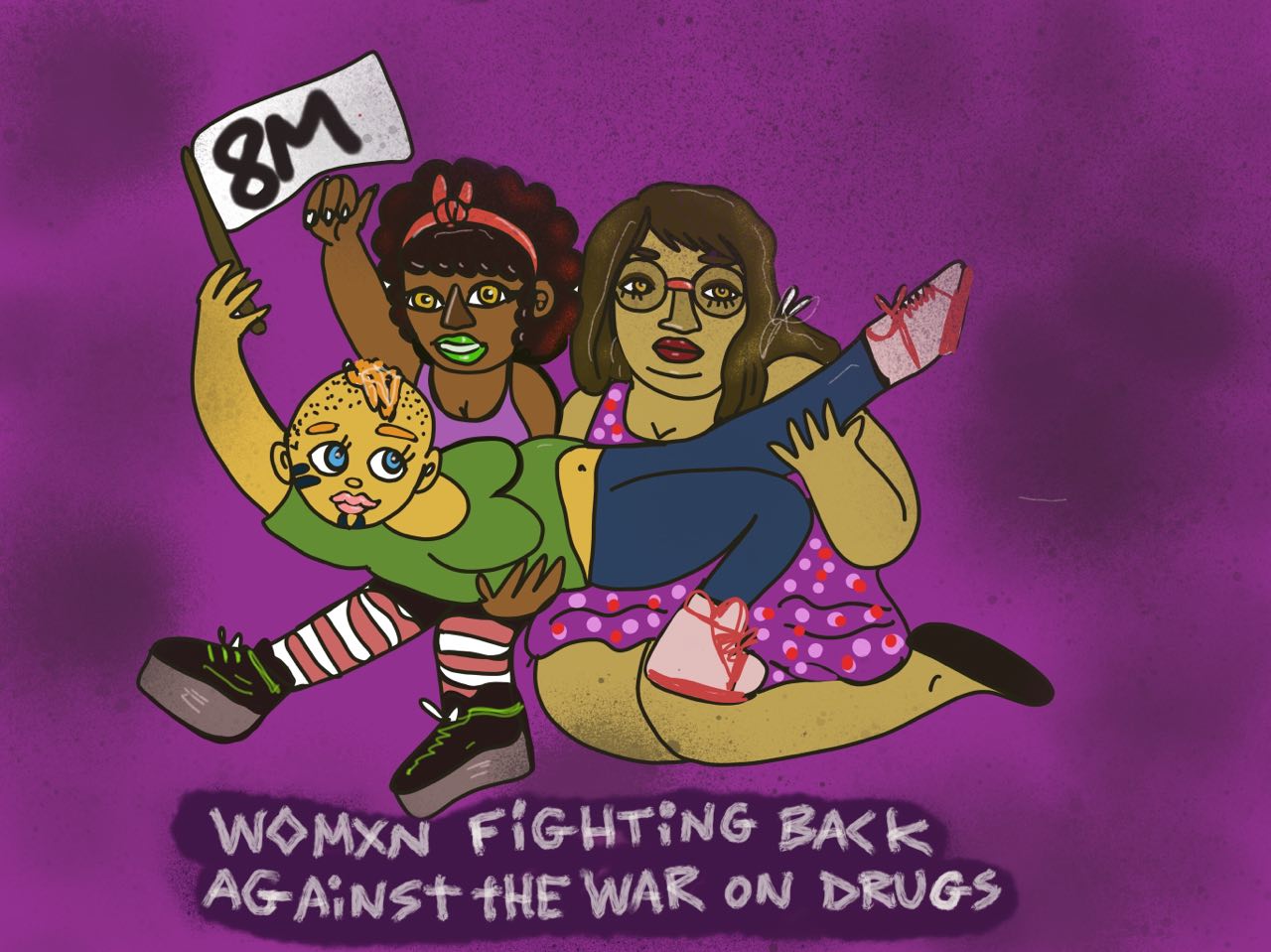 The War On Drugs is racist, sexist, classist and heterosexist, and disproportionately affects womxn of colour, youth and womxn in poor communities.
As womxn, trans and gender non-conforming people surviving this war, we reject the widespread stigma, discrimination and criminalisation we face in our daily lives. We call for complete reform and transformation of the current system of prohibition. We call for an end to the ignorant and negative rhetoric.
Drug treatment services are gendered, classed, sexualised and racialised. Drug ‘treatment’ itself is based on spurious and outdated research, and allows unbridled and unregulated power over the individual. We reject these methods and the ideologies underpinning them.
Global and systemic oppressions violate our rights, as womxn, trans and gender non-conforming people who use drugs, and situate us in multiple, interconnected, vulnerable positions, which lead to numerous harms:
- As womxn who inject drugs, we have a higher prevalence of HIV and Hepatitis than men. Despite this, we don’t appear in data and endure discrimination and exclusion from social and health services. The few resources we have tend to be masculinised and inaccessible as well as often not meeting our needs, interests or expectations.
- We are disproportionately impacted by structural violence and social control from the State (policing, limited access to legal aid, extortion, long prison sentences, rape, extrajudicial murder and capital punishment).
- The majority of womxn in prison are sentenced for non-violent drug related offences. Womxn of colour, ethnic minorities, non-binary or trans, and the homeless are particularly targeted. In several countries, we face detention in compulsory, unregulated ‘treatment” centres , often for indefinite periods with little or no access to judicial processes. Incarceration in closed settings creates a context for increased human rights violations, such as rape and extortion.
- We often experience endemic violence and exclusion within our own communities and families. Not only are we more likely to be assaulted by our partners, but we are less likely to have recourse to justice and protection
- We suffer intrusion into our bodily and physical integrity, maternal and family life and domestic space. We face routine violations of our sexual and reproductive health rights, by both community and state such as coerced sterilization and pregnancy termination.
- Stigma that assumes womxn who use drugs cannot take care of their children and misinformation on the effects of drug use feeds into strong pressures to end pregnancy. When we don’t terminate our pregnancies, there’s a strong possibility we will lose custody of our children.
- Those of us who are sex workers, and especially trans womxn and womxn living with disabilities cope with an unacceptable and compounded web of stigma, discrimination and social exclusion.
Despite living with these and other multiple forms of violence daily, Womxn Fighting back Against the War On Drugs are resourceful, enterprising, creative and strong. We possess remarkable resilience. We fight back against prohibition with solidarity, mutual support and leadership, building our networks from the grassroots to the global, from immediate action to long-term strategies to end this war on womxn who use drugs. We embrace intersectional and anti-prohibitionist feminism that integrated queer/trans-inclusive and non-ableist approaches, racial justice and the right to use drugs and experience pleasure. We work to reclaim our bodily sovereignty, including rights to the full range of sexual and reproductive health, gender-sensitive health services, and rights to use drugs. We do not ask for charity but for solidarity. We demand to live in safety and freedom.
This declaration is an invitation to join forces with womxn like us, womxn who demand an end to the War on Drugs and the negative impact it has on all our lives.
“Let us all cause some trouble and begin to change the world with and for women who use drugs with our powerful conceptual armaments in hand.” Elizabeth Ettorre
Our bodies – our choice, our rights, our voice.
#narcofeminism #femdrug
The following groups / organisations support this declaration:
1. Eurasian Harm Reduction Association (EHRA)
2. Women and Harm Reduction International Network (WHRIN)
3. COUNTERfit
4. Metzineres. Environments of Shelter for Womxn who Use Drugs Surviving Violences
5. XADUD. Network of Womxn who Use Drugs
6. REMA. Network of Anti-Prohibitionist Women
7. ARSU – Grup de Dones
8. FAAAT think & do tank
9. Pla d’accions sobre drogues de Reus
10. European Institute for Multidisciplinary Studies on Human Rights and Science | Knowmad Institut
11. Iglesia Evangélica Protestante de El Salvador (IEPES)
12. Youth RISE
13. Association for Women’s Rights in Development (AWID)
14. International Network of Women who use Drugs (INWUD)
15. PeerNUPS
16. Canadian Students for Sensible Drug Policy
17. Género y Drogodependencias (Madrid)
18. Perempuan Pengguna NAPZA Indonesia dan Deklarasi Jenggala
19. Agência Piaget para o Desenvolvimento – APDES
20. CASO Portugal
21. European Network of People Who Use Drugs – EuroNPUD
22. NGO Re Generation
23. Youth Organisation For Drug Action
24. WeCanna-Weedgest
25. REMA
26. PeNUPS
27. Life Quality Improvement Organisation FLIGHT
28. AFEW International
29. Društvo AREAL
30. “Harmreduction network” association.
31. CA PRIMA
32. En Plenas Facultades
33. Delhi Drug User Forum
34. Association Margina
35. ARAS – Romanian Association Against AIDS
36. AKUT Foundation, Hungary
37. ALE “Kazakhs Union of People Living with HIV”
38. Eurasian Women’s Network on AIDS
39. Hepminus
40. Crew
41. Kosmicare Association
42. COUNTERfit Harm Reduction Program (Canada)
43. Jane Lane
44. ASAUPAM
45. ARSU
46. Toronto Overdose Prevention Society
47. Help Not Harm
48. AIVL
49. PeNUPS
50. Frontline AIDS
51. GAKNI – Gerakan Advokasi Kebijakan Napza Indonesia (Indonesia Drug Policy Advocacy
52. Movement)
53. Nepal for Public Health
54. Indonesia Drug Policy Reform
55. GO “All- Ukrainian network of Ukrainiane Users”
56. Global Inklusi Perlindungan AIDS
57. Confederación de federaciones cánnabicas (ConFAC)
58. New Taskon padang
59. Federación de asociaciones Cannàbicas de Cataluña (CatFAC)
60. Italian Network of People Who Use Drugs – ItaNPUD
61. Perempuan Bersuara
62. Gerakan Advokasi Kebijakan NAPZA Indonesia (GAKNI) / Indonesia Drugs Policy Advocacy
63. Forum Akar Rumput Indonesia (FARI) / Grass-Roots Indonesian Forum
64. Aksi Keadilan Indonesia (AKI) / Indonesian Justice Action
65. Persaudaraan Korban NAPZA Bogor (PKN Bogor) / Bogor Drug User Community
66. Drugs Policy Reform (DRP) Banten, Indonesia
67. Forum Droghe (IT)
68. TaNPUD
69. SALVAGE
70. Salamander Trust
71. Stop Overdose Now
72. CF “VIRTUS”
73. Real People Real Vision
74. Asia Catalyst
75. Romanian Harm Reduction Network
76. EHPV
77. CHECK!N
78. LGBT organization Labrys
79. Club “Svitanok”, Ukraine
80. RELEASE
81. SANANIM
82. Rights Reporter Foundation
83. Komunitas perempuan pengguna napza Pekanbaru (comunity women who use drugs Pekanbaru)
84. Steps
85. EATG (European AIDS Treatment Group)
86. PREKURSOR Foundation for Social Policy
87. Harm Reduction International
88. STOP AIDS, ALBANIA
89. Odyseus
90. Kosmicare Association
91. Sexism Free Night
92. Sex Worker Advocacy and Resistance Movement (SWARM)
93. Andrey Rylkov Foundation
94. InMouraria-GAT
95. Drug Policy Network South East Europe
96. NORML France
97. Women in Europe and Central Asian Regions plus (WECARe+)
98. Élixir
99. Canadian Drug Policy Coalition
100. 4yourvoiceportugal
101. Legalize Belarus
102. SimplementeOpinión
103. India HIV/AIDS Alliance
104. Estonian Association of People who Use psychotropic substances „Lunest“
105. SALVAGe
106. TaNPUD
107. Women Who Use Drugs Malaysia
108. Polish Drug Policy Network
109. Indigo Harm Reduction Services
110. NGO Volunteer ( Tajikistan GBAO)
111. CATNPUD. Catalan Network of People who Use Drugs
112. NGO “RIGHT OF EVERYONE”
113. New Generation Humanitarian NGO / Armenia (NGNGO)
114. Občianske združenie Prima
115. I am Kogan Julia, the leader of the community of people living with drug addiction in the city of Odessa.
116. NGO “April Project”
117. ICEERS Foundation
118. Eurasian Network of People who Use Drugs
119. Asian Harm Reduction Network Myanmar
To add your organisation’s name to the signatories or to keep in touch – please complete this form.
ToR for the consultant to develop research methodology for community-based assessment of patient satisfaction with OST services
The transition period from the Global Fund resources to public budget affected sustainability of opioid substitution treatment services in CEECA countries. State and NGOs implement different variants of OST programs: covered by public or municipal budget and free for patients; fully or partially self-paid by patients. Alongside with those changes, EHRA started receiving information from national partners and OST patients about the worsened quality of services.