Техническое задание для консультанта по сбору данных о случаях нарушениях прав человека в Республике Молдова

Евразийская ассоциация снижения вреда (ЕАСВ) в рамках трехлетнего мультистранового проекта «Устойчивость сервисов для ключевых групп населения в Восточной Европе и Центральной Азии» (#SoS_project),реализуемого Международным благотворительным фондом «Альянс общественного здоровья» в консорциуме с Всеукраинской сетью людей, живущих с ВИЧ (100% Life), Центральноазиатской ассоциацией людей, живущих с ВИЧ и Сетью здоровья ключевых групп населения Евразии, региональными сетями, правительственными и неправительственными организациями и рядом технических партнеров, проводит открытый конкурс на позицию консультанта по сбору данных о случаях нарушения прав человека в Молдове для реализации цели 2 проекта– снижения наиболее важных правозащитных и гендерных барьеров для доступа к услугам по профилактике и уходу в связи с ВИЧ.

Сбор данных о случаях нарушения прав человека среди людей, употребляющих наркотики, обеспечение последующей реакции и представление докладов договорным органам ООН по правам человека будет способствовать устранению барьеров для доступа к услугам по профилактике и уходу в связи с ВИЧ для людей, употребляющих наркотики в странах ВЕЦА. Кроме того, менторство и техническая помощь партнерам из национальных сообществ будет способствовать наращиванию потенциала сообществ в сборе данных о нарушениях прав человека и понимании системы последующих действий для ее систематического и эффективного использования.

Сбор данных о случаях нарушения прав человека среди людей, употребляющих наркотики, в Молдове послужит доказательной базой при адвокации внесения поправок в действующее национальное законодательство, направленное на соблюдение и защиту прав людей, употребляющих наркотики, и станет основой для последующей подачи докладов договорным органам ООН по правам человека.

Задачи консультанта и ожидаемые результаты:

  1. Провести полуструктурированные интервью с:
  • людьми, которые имеют 1 судимость и отбывали наказание в тюрьме в связи с наркотическими средствами (2 штуки минимум);
  • людьми, которые имеют 1 судимость и получили условный срок в связи с наркотическими средствами (2 штуки минимум);
  • людьми, которые привлекались к ответственности, но выбрали лечение в связи с наркотическими средствами (2 штуки минимум);
  • людьми, получившими штраф за хранение/употребление в связи с наркотическими средствами (2 штуки минимум);
  • людьми, которые имею более одной судимости и отбывали наказание в местах заключения в связи с наркотическими средствами (2 штуки минимум);
  • людьми, которые имеют более одной судимости, но не отбывали наказание в местах заключения в связи с наркотическими средствами (2 штуки минимум).

Отбор респондентов:

  • среди респондентов должны быть и мужчины, и женщины;
  • опыт привлечения к уголовной/административной ответственности в течение последних 5 лет;
  • возраст 18-50 лет.

Руководство для проведения интервью будет разработан ЕАСВ совместно с выбранным консультантом. Представитель ЕАСВ окажет помощь в проведении интервью (выезд в Молдову).

2. По предоставленной ЕАСВ форме по каждому интервью сделать краткое описание с самыми яркими цитатами.

3. Подготовить общий описательный отчет с общими трендами и цитатами на 5-10 страниц максимум. Помимо информации, собранной в результате интервью, отчет должен включать:

  • Статистику по видам наказания (штрафы, сроки и за какое количество);
  • Как размеры штрафов соотносятся со средним доходом, размером минимальной заработной платы.

Сроки выполнения работ:

  1. Первый черновик отчета – 20 октября 2019;
  2. Финальный отчет, с учетом комментариев со стороны ЕАСВ – 15 ноября 2019.

Требования к консультанту:

Представленные конкурсные заявки будут оцениваться отборочной комиссией Евразийской ассоциации снижения вреда. Для оценки конкурсных заявок будут использоваться следующие критерии (максимально возможное количество баллов – 100):

  1. Знание русского и румынского языков (20 баллов);
  2. Соответствующий опыт работы, знания и опыт в области снижения вреда являются преимуществом (в заявке должны быть представлены документы или ссылки на транскрипты интервью и/или аналитические отчеты, подготовленные претендентом) (45 баллов);
  3. Грамотный письменный русский или английский (15 баллов);
  4. План работ и сроки (20 баллов).

Стоимость работ:

Не может превышать 1000 долларов США (выплачивается по окончании работ и предоставлению ЕАСВ финального отчета).

Как подать заявку:

Кандидатам необходимо предоставить свое резюме и заявку (письмо о заинтересованности) в свободной форме по адресу maria@harmreductioneurasia.org, тема письма – “Consultant  Moldova, крайний срок подачи – до 24:00 EET 25 августа 2019 года. Резюме и заявка должны четко отражать компетентность кандидата, необходимую для выполнения этой задачи, а также включать предлагаемое количество рабочих дней по каждому этапу и сроки их реализации.

Общие условия:

Заинтересованным консультантам необходимо обратить внимание на следующие условия:

  • ЕАСВ подпишет договор с победителем конкурсного отбора. В договоре будет определен подробный план работы и условия оплаты.
  • Победитель конкурсного отбора обязуется предоставить подтверждение своих дневных расценок до подписания договора.
  • ЕАСВ оставляет за собой право (но не связывает себя обязательствами) вступить в переговоры с одним или несколькими заявителями с целью получения разъяснений или дополнительных сведений, а также для согласования предлагаемых расценок.

Если у вас возникли какие-либо вопросы или вам необходимы разъяснения относительно данного ТЗ, пожалуйста, свяжитесь с Марией Плотко по адресу maria@harmreductioneurasia.org не позднее 20 августа 2019 года.
Техническое задание для консультанта.

Visiting EHRA: ENPUD’s Secretariat with internship in Vilnius

On August 7–9, 2019, an internship was held for the staff of the ENPUD’s Secretariat in the EHRA office.

The purpose of the internship was to build the structural work of the ENPUD’s Secretariat and to establish effective collaboration between the ENPUD’s and EHRA’s Secretariats. The internship was conducted by briefing participants on the internal processes and procedures of the EHRA as a financial agent of ENPUD, which affect the activities of ENPUD. In the future, the model of the EHRA’s work as a recognized leader in promoting ideas and mechanisms for harm reduction in the EECA region should become the basis for the activities of ENPUD in the framework of work with the community.

Here are just a few of the topics that we discussed and brought to the level of skills together with EHRA staff:

  • 7 basic principles of NGO financial management: consistency, accountability, transparency, sustainability, integrity, oversight, and accounting standards.
  • Grant funds: basic concepts, who gives, where they come from, how to spend them.
  • Procurement standard.
  • Principles of wage formation and wage regulation.
  • Organization of events: from a memo to the departure of participants.
  • Regulation on the ENPUD’s Secretariat and many other topics.

Tatyana Kochetkova, ENPUD Program Coordinator: “What are the two keywords I would describe an internship at EHRA?? Scrupulousness and Privilege… Meticulousness is a characteristic of how the EHRA’s material was prepared and provided. Each section, each topic is presented from below, from above, from the side, from the inside, and in perspective. Everywhere … The privilege is in getting everything we want now, the entire EHRA resource at our services, on request, any topic, like the possibility of ensuring the quality of our product when we gain organizational and financial independence … Thank you, colleagues! ”

Aidana Fedosik, portfolio project manager of the ENPUD: “The internship at EHRA was conducted in very warm atmosphere. It was very tight and informative, very professional, clear and concise. The internship is over, but our joint activities continue. It was very productive. Three days of mentoring without moralizing, feedback without criticism, and acceptance without connivance. As a result we take home the answers to hundreds and hundreds of our questions as well as clear outcomes of the internship. Ganna Dovbakh, Tanya Fomicheva, Harry Gordon, Olga Belyaeva, Vika Semionova, Irena Zubkova – you are great professionals! Someone will thank you for appreciation of our work. And I will say thank you for setting the bar high. Thank you, EHRA, for knowledge and patience, because it is not easy with us sometimes. We will definitely meet soon!”

The original of the news – Digest of the events of ENPUD’s Secretariat (in Russian).

Extended: Tender for a consultant to collect the official statistical data in the Kyrgyz Republic

The Eurasian Harm Reduction Association (EHRA) as part of the three-year multi-country project “Sustainability of Services for Key Populations in Eastern Europe and Central Asia” (#SoS_project), implemented by the Alliance of Public Health Charitable Foundation in consortium with the All-Ukrainian Network of People Living with HIV (100% Life), the Central Asian Association of People Living with HIV and the Eurasian Key populations Health Network, regional networks, governmental and non-governmental organizations, and a number of technical partners, announce an open tender for a consultant to collect official statistics in Kyrgyzstan to implement Objective 2 of the project – to reduce the most important human rights and gender barriers to accessing HIV prevention and care services.

Gathering data on human rights violations among people who use drugs, ensuring follow-up, and reporting to the UN human rights treaty bodies will help remove barriers to access to HIV prevention and care services for people who use drugs in EECA countries. In addition, mentoring and technical assistance to partners from national communities will help build community capacity in collecting data on human rights violations and understanding the follow-up system for its systematic and effective use.

To prepare a report to the Special Rapporteur on extreme poverty and human rightson the proportionality of imposed fines for the possession of narcotic drugs, the EHRA is looking for a national consultant to collect official statistical information.

Tasks of the consultant and expected results:

  1. Collect official data, with links to the source:
  • Average salary;
  • Minimum wage;
  • The average unemployment rate across the country and by region, age group and gender;
  • The ability to receive social benefits, their size and inclusion/exclusion criteria;
  • Narcological registration (for what services are needed, what the deregistration procedure is, how open this information is for access to the third parties);
  • Barriers attributed to the presence of criminal and/or narcological records (for employment, education, obtaining a driver’s license, etc.);
  • The cost of rehabilitation services and the opportunity to receive them free of charge;
  • The size of fines for possession of narcotic drugs according to new legislation and the real size of imposed fines according to the court statistics;
  • The number of detainees since the introduction of the law on changing the size of fines for possession of narcotic drugs (for what offence, what punishment, distribution by gender and age if possible).
  1. Analyze the collected data in terms of the proportionality of the fines imposed to the offense and the economic situation in the country, and prepare an analytical 3-5 pages report.

Proposed timeline:

  1. Data gathering – September 30, 2019;
  2. The first draft of the report – October 13, 2019;
  3. The final report, taking into account comments from EHRA – October 31, 2019.

Requirements to Consultant:

The submitted applications will be evaluated by the selection committee of the Eurasian Harm Reduction Association. The following criteria will be used to evaluate the bids (the maximum possible number of points is 100):

  1. Knowledge of the Russian and Kyrgyz languages (25 points);
  2. Relevant work experience, knowledge and experience in the field of harm reduction are an advantage (documents or links to analytical materials should be submitted in the application) (50 points);
  3. Literate written Russian or English (25 points);

The cost of work:

The amount of the contract may not exceed $ 1,000 (paid upon completion of work and the provision of a final report to EHRA).

How to apply

Applicants must submit their CV and application (letter of interest) in free form to maria@harmreductioneurasia.org, the subject of the letter is “Consultant SREPHR”, the deadline for submission is before 24:00 EET on September 4, 2019. The CV and application should clearly reflect the competency of the candidate and number of working days necessary to complete this task.

General terms

Interested consultants should pay attention to the following conditions:

  • EHRA will sign an agreement with the winner of the competitive selection. The contract will define a detailed work plan and payment terms.
  • The winner of the competitive selection agrees to provide confirmation of their daily rates before signing the contract.
  • EHRA reserves the right (but does not commit itself to obligations) to enter into negotiations with one or more applicants in order to obtain clarifications or additional information, as well as to agree on the timing of work.

If you have any questions or need clarification regarding this ToR, please contact Maria Plotko at maria@harmreductioneurasia.org no later than August 31, 2019.

Let’s act together! Join EHRA to clarify an official position of the Ministry of Health regarding the harm reduction in Lithuania!

To everyone. Urgently.

NGO “Young Wave” (Lithuania) participated in the call for proposals for prevention projects, social information campaigns, scientific research projects, announced by the State Public Health Strengthening Fund. The application was aimed at raising awareness of the risks of the psychoactive substance use and harm reduction among festival and party goers, thereby encouraging the target group to make responsible decisions regarding the use of the psychoactive substances and health. What is more, application aimed to raise awareness about drug use, harm reduction among festivals and parties organizers and staff, as well to break the stereotypes about drug use in the society.

The application received 0 points, thus NGO “Young Wave” sent the request to justify the tender results and received response from the State Public Health Strengthening Fund under the Ministry of Health, regarding the harm reduction services promotion for non-injecting drug users in Lithuania.

EHRA expresses its deep concern about the position of the State Public Health Strengthening Fund and asks Minister Veryga to state whether this position coincides with the official position of the Ministry of Health.

If you want to hear the truth too – let’s act together!

By August 18, please sign a Joint Statement to the Minister of Health of the Republic of Lithuania. Be sure to include the name of your organization and the country. Eliza Kurcevic (EHRA) will collect your confirmations of your support to E-mail eliza@harmreductioneurasia.org.

Show your support!

EHRA Team

Tender for the Selection of Designers

Eurasian Harm Reduction Association (further EHRA) announces a tender for the selection of designers for a long-term cooperation with EHRA.

Based on the results of the tender, EHRA will select several designers, with whom EHRA will conclude long-term contracts.
More information about the Association and specifics of the work you can find on our website https://old.harmreductioneurasia.org

Type and subject of the tender:
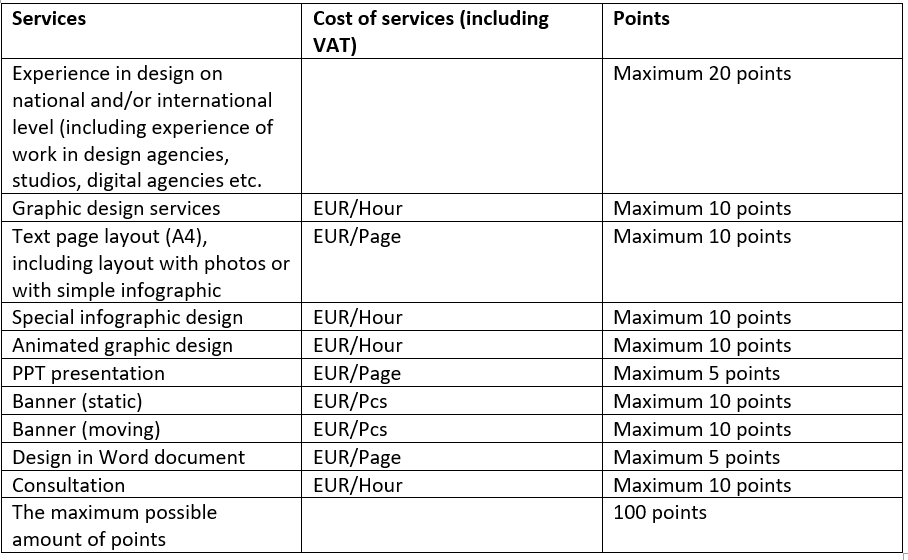
As part of its work, EHRA requires quality, professional graphic design, infographics, banners and other design services to fill the site’s content, groups in social networks, to use it in promotional materials (presentations, stands, guides, methodologies, articles, blogs, interviews, project implementation reports to partners and donors).
As a result of the tender, designers with the highest amount of points will be chosen. Description of work:
– graphic design services;
– infographic design services;
– design in Word document, PPT presentations;
– production of banners (static and moving).

Requirements to participants of the tender/evaluation criteria:
Essential requirement for the participants:
– knowledge of Russian or English languages (Intermediate level B1 – minimum);
– work experience as a professional designer at least 3 years;
General requirements:
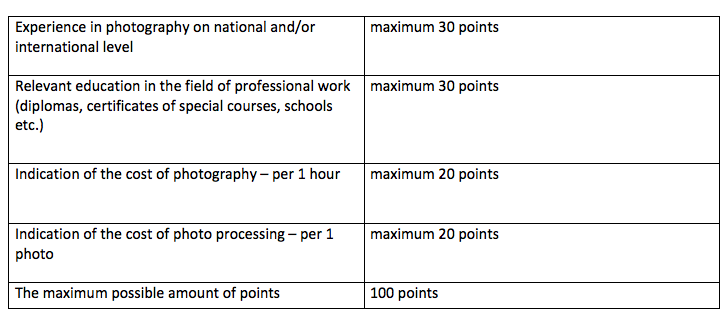
To assess the tender applications, the following criteria will be used (maximum amount of points for each criterion):
ATTENTION! If the participant doesn’t have a relevant experience in some of the criteria, please, skip it (do not put any cost of such service in the form).

Participants must submit:
1. CV in a free format, which should include:
– previous work experience as a professional designer;
– filled form of the cost of services (mentioned above).
2. A link to the portfolio of works (At least 10 examples).
3. Copies of diplomas and certificates (if the participant has).

ATTENTION! If these documents are not provided in full, such application in not considered for evaluation.
Application deadline1 p.m., August 10, 2019, Vilnius local time. Please send your documents to Yuliia Holub at julia@harmreductioneurasia.org

Special conditions:
Upon the completion of the tender procedures, EHRA will sign long-term contracts with the selected number of winners on a fixed cost of services per unit basis in EURO (one hour of work under design and one page of one product). Further work will be carried out based on the needs of EHRA and according to the timeline and other conditions, which will be decided upon in each individual case.
The submission of documents for participation in the tender does not impose on EHRA any additional obligation to conclude a contract.

By submitting the requested data, I agree that the Eurasian Harm Reduction Association has the right to use my personal data the name, surname, email, phone number, motivation letter and biographical data (including copies of diplomas and qualifications’ certificates, examples of my work) with the purpose of holding a tender and selecting the candidates, which participate in the tender, further accounting and audit of the Association.
To communicate with the participants of the tender, the EHRA can use my name and surname, email and phone number.
I agree that my data will be saved in the archives of the EHRA according to the Order of the Lithuanian State Archive “On the approval of the general term for keeping the documents”.

Invitation to participate in the tender for the selection of photographers

Eurasian Harm Reduction Association (further EHRA) announces a tender for the selection of photographers for a long-term cooperation with EHRA in Lithuania.

Based on the results of the tender, EHRA will select several photographers, with whom EHRA will conclude long-term contracts.

More information about the Association and specifics of the work you can find on our website https://old.harmreductioneurasia.org

Type and subject of the tender:

As part of its work, EHRA requires quality, professional photos to fill the site’s content, groups in social networks, to use it in promotional materials (presentations, stands, guides, methodologies, articles, blogs, interviews, project implementation reports to partners and donors).

As a result of the tender, photographers with the highest amount of points will be chosen. Description of work:

– photography (conferences, meetings, round tables, trainings, seminars, etc.; portrait and group photo sessions of the EHRA team); photo processing.

Requirements to participants of the tender/evaluation criteria:

Essential requirement for the participants:

– place of residence – Lithuania;

– knowledge of Russian or English languages (Intermediate level B1 – minimum);

– work experience as a professional photographer at least 3 years;

– tolerance to vulnerable groups of people.

General requirements:

To assess the tender applications, the following criteria will be used (maximum amount of points for each criterion):

Participants must submit:

  1. CV in a free format, which should include:
  • previous work experience as a professional photographer;
  • indication of the cost of services: photography/ photo processing in EURO (1 hour/1 photo).

2 A link to the portfolio of your work (At least 10 examples).

3 Copies of diplomas and certificates.

ATTENTION! If these documents are not provided in full, such application in not considered for evaluation.

Application deadline – 1 p.m., August 10, 2019, Vilnius local time. Please send your documents to Yuliia Holub at julia@harmreductioneurasia.org

Special conditions:

Upon the completion of the tender procedures, EHRA will sign long-term contracts with the selected number of winners on a fixed cost of services per unit basis in EURO (one hour of photography and photo processing of one photo). Further work will be carried out based on the needs of EHRA and according to the timeline and other conditions, which will be decided upon in each individual case.

The submission of documents for participation in the tender does not impose on EHRA any additional obligation to conclude a contract.

Kestutis Butkus: “The most important thing for me is not the decision of the Lithuanian court or the ECHR, but the fact that my case resulted in the passing of a law on the provision of OST in Lithuanian prisons. This is a real victory. Our common advocacy driving force.”

EHRA presents a series of conversations with people whose names and roles in harm reduction are well known in the region of Central and Eastern Europe and Central Asia, and beyond. They will share with us the most valuable – their experiences, thoughts, memories.

Kestutis Butkus is a well-known activist, one of the first from the community of people, who use drugs in Lithuania. 8 years ago, his right to health was violated by non-provision of opioid substitution treatment (OST) in prison (at that time, Lithuania remained one of the few EU countries where OST was inaccessible to people in prisons). Kestutis chose the path of struggle against the system and not because of, but rather in spite of, became one of the few (alas), who managed to influence the Law. Since 2018, opioid substitution therapy has been introduced in Lithuanian prisons, but we need to remember – this is only the beginning of a long way*

– What were the circumstances of your arrest in 2011?

– Eight years ago, police “apprehended” me by accident – they found a couple of grams of marijuana in the car. I had several outstanding fines at that time and the judge decided to sentence me to forty-five days in detention so that I would fully comprehend my crime. “Let him lie down and think,” she said. At the trial, I mentioned the methadone program, as I had been receiving substitution therapy for ten consecutive years, to which the judge’s reaction was: “This is outside our competence”.

– Wow. Did you agree with that ruling?

– I appealed, but my appeal was prepared by a person without a license (it used to be possible to do it that way) and then I was put on the wanted list. I didn’t know anything about it. Then one day I came to the migration services to collect my passport. First, they locked me in a room, then a convoy arrived and escorted me to prison. First to pre-trial detention, then to Lukiškės (a prison in Vilnius – comment by EHRA). During all that time no one really explained anything to me. I started writing letters – asking “what for”? There was no answer. Then I found out that those were the forty-five days of detention. It turned out nobody actually read my appeal, they didn’t even consider it. The court ruling came into force, which meant I had to be in prison.

On the first day of the detention, a doctor came to examine me, and I asked for methadone. The doctor, whose name was Mendelevich, said: “You’ll find it very hard – we don’t have a program here. I can only transfer you to the prison hospital, but everything is the same there, except that the ward is more spacious, and smoking is forbidden. You still won’t get methadone though, I can only prescribe “cockroaches”.

– What is it?

– We call light psychotropic substances “cockroaches”. They’re prescribed to everyone so that people can withstand imprisonment, but they have nothing to do with substitution therapy. I began to write appeals, requests, but there was no response.

– Do you remember the prison conditions well?

– Lukiškės is an old prison, it was built in the XIX century. At that time, it was considered one of the most modern in the Russian Empire (at that time most of Lithuania was under the Russian rule — comment by EHRA). These days however it falls short of the standards provided at similar institutions in the European Union. The cells are cramped, for four, there is a table, a washbasin and a toilet. Restriction of freedom is in itself a terrible thing, and those conditions make it simply indescribable. The first eight days were awful. I couldn’t sleep, I started suffering from claustrophobia, though I never had it before. I only managed to get through those moments because I could see a piece of the sky and some rooftops through the bars on the window. I was also lucky to have just one other inmate in my cell, not three (my neighbour was also from the community, by the way, but by that time he had gone through withdrawal).

– Did you spend your entire detention in Lukiškės?

– After eight days I was transferred to another prison – Provinishki (80 km from Vilnius – comment by EHRA). Once there I also immediately mentioned that I was on substitution therapy. The doctor’s answer was: “Don’t complain about your addiction. It’s dissoluteness, not illness.” I understood everything… I said: “I don’t need anything. Just prescribe me some aspirin to thin the blood” (I have a heart valve). They gave it to me, along with “cockroaches”. I was left in a one-person cell for fourteen days. All by myself, having bouts of insomnia…
– Did anyone know you were in prison without access to methadone? Were you allowed to have visitors?

– I was allowed to see a lawyer for the first time in Proviniski – my ex-wife contacted Emilis Subata (Dr. Emilis Subata, Director of the Vilnius Center for Addictive Disorders). He in turn contacted the “I Can Live” Coalition (Vilnius, Lithuania), as I was their member. They managed to hire legal protection for me. Then we thought that this incident could set the wheels in motion for the introduction of OST in Lithuanian prisons. At that time, civil society had been trying unsuccessfully for more than ten years to discuss the matter with the prison department of the Ministry of Justice.

– What measures did the solicitor take?

– He prepared a petition to the prison authorities demanding that they provide me with methadone and requesting a written reply. As a result, a psychiatrist came to see me … (Interestingly, it was only then that I learned that such a specialist was available in prison). He began to reason with me. I said: “Don’t talk, give me a letter.” It was exactly that that acted as a “catalyst” for the whole process. When I was released forty-five days later, the Coalition’s human rights lawyers read the prison’s reply and confirmed that it could be used to refer the case to court, and that we had a chance to overhaul the system. As for my condition… I couldn’t return to the substitution program for a year after my release. I thought I had dealt with withdrawal and that I was able to pull through but I was wrong. I often left the city to see my friends or went to the forest — I didn’t want my daughter (she was still a teenager then) to see what was happening to her dad.

– When did you manage to become stable?

– It was only after a year that I was able to return to the program. That’s when my “marathon” started. First, we went to the local court – they ruled against me. Then we went to the district court, then to the Appeals court – with the same result. Six years later we reached the Supreme Court.

What was the ruling?

– Same as before. That’s why we wrote to Strasbourg, to the European Court of Human Rights (ECHR). The court looked into our case, registered it with a number and accepted it for consideration. The ECHR works according to the following procedure: there are two Chambers. The first one determines whether all opportunities have been exhausted at the national level (in our case it was a yes). And if so, transfers the case to the second Chamber. As soon as that happened, the Lithuanian State literally “woke up” – representatives of the Ministry of Justice, the management of the two prisons I had been in, and the Ministry of Health. Six years on, the Ministry of Health suddenly “remembered” that they had a damage recovery commission, which was to be contacted no later than two weeks after an incident. Of course, I had not contacted the commission. I filed an appeal to the Supreme Court of Lithuania for a retrial based on that fact. It stalled the whole process.

– What was the reaction in Strasburg?

– The ECHR wrote to my lawyers asking what was going on. Lawyers reported that the Ministry of Health had taken the case to court. Upon learning that Strasbourg suspended the case pending clarification.
– Circles of Hell all round…

– Another year went by. In 2018, the Supreme Court acknowledged that I was the injured party. The damage caused to me was estimated… at three hundred euros, plus a bit more for the lawyers and redress – the court admitted I had been right. We appealed those three hundred euros – the court added another thousand on top and just over a thousand for my defence. However, after talking to my lawyers, I decided not to stop there and filed an appeal to Strasbourg over other violations – conditions of detention, standards of hygiene and size of the cell. In the West, such conditions constitute torture.

Last summer, Strasbourg accepted my case. Based on international case law, the lawyers requested thirty-five thousand euros in compensation. And I want to add – that is not a huge amount. There were similar cases in Poland and the UK, where the compensation was about a hundred thousand or more.

– If ECHR rules in your favour, who’s going to be liable for compensation?

– The state. To be more precise – the Justice Ministry. The most important thing for me however is not the decision of the Lithuanian court or the ECHR, but the fact that my case resulted in the passing of a law on the provision of OST in Lithuanian prisons. This is a real victory. Our common advocacy driving force.

– That is, from now on, if someone in need of methadone is put in jail, they’re going to get it there?

– In prison, remand prison, temporary detention facility – everywhere. The law applies to anyone detained for two or more days. There is a catch though. Only those who are officially enrolled on the OST program can receive methadone. We won’t leave it as it is though – the community is putting pressure on the prison department writing letters asking to amend the law and I hope we will be heard.

– Why do you think it took the prison department years to resolve the issue of access to life-saving treatment in prisons? Ruining hundreds of lives along the way – of those who didn’t dare to stand up to the system. Was it money?

– The prison department have a healthcare department within it. And the healthcare department thought that introducing OST in prisons was a very complicated and costly process. They argued that they needed millions to do it. I remember another argument of theirs – where would they keep methadone in prison, it requires special storage conditions! Where else if not in prison! What could be easier than designating a room and installing a methadone dispenser! Implementing the program did not require any significant funds. Who knows though, maybe the prison department just wanted to get some extra money from the Justice Ministry? They are like a state within a state, aren’t they – they report to it but at the same time are independent. They even have their own special internal system, ranks and epaulets.

– It’s like an iceberg then – you can see the reasons that are at the top, that’s 10 per cent, but there are more issues underwater which account for the remaining 90 per cent of barriers.

– I’ll give you another example. They opened the so-called rehabilitation centre for drug users at a prison in Alytus (town in Lithuania – comment by EHRA.) They constructed a building for it especially, furnished it with everything new. Guess who’s moved in there? The entire bunch of the prison’s top dogs, inmates who have nothing to do with the rehabilitation program. Furthermore, they were selling drugs from there for a few years. You think the prison authorities didn’t know that? After all, it’s no secret that drugs are available in prisons at crazy prices. How could such amounts of drugs filter their way into institutions without some help on the inside, from the staff? –
The introduction of the methadone program has slashed the numbers of paying “clientele”. Therefore, my answer about the reason for such a disastrous delay in the implementation of OST in prisons sounds simple – “not profitable.” And I’m happy that my case managed to break the deadlock.

* – According to the Report by the European Committee for the Prevention of Torture and Inhuman or Degrading Treatment or Punishment (CPT) from 2018: “…at Alytus, Marijampolė and Pravieniškės Prisons… Opioid substitution treatment was still not available in prisons visited. As in the past, methadone maintenance treatment was continued for persons in police custody but discontinued after their transfer to a prison. Further, there was still nothing on offer in terms of harm reduction, such as a syringe and needle exchange, distribution of condoms, etc.” https://rm.coe.int/168095212f


The future is intersectional

Author: Maria Plotko, Program Officer, EHRA

Over the last few months, two important conferences on drug policy and harm reduction took place in Europe: activists were sharing best practices and tools at the International Harm Reduction Conference in Porto, whereas researchers were presenting their findings at the  annual conference of the International Society for the Study of Drug Policy in Paris. The two conferences shared the topic but crucially did not form joint advocacy efforts. What drug policy movement needs now is to connect these two worlds. Here are my highlights from both conferences.

  • Porto

The past Harm Reduction conference like probably always was the place where every person is not just tolerated but welcomed with a warm hug. Coming from Russia, where harm reduction is not really a mainstream,  it felt like a huge opposition gathering. The topics I followed were drug policy, human rights and providing funding for harm reduction. 

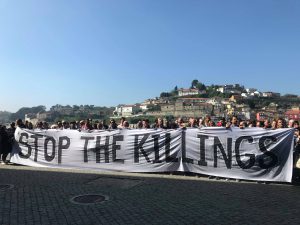
In accordance with the slogan of the conference — “people before politics” — quite a lot was said about human rights. We, as a society, tend to blame individuals and trust the system to fix them, but it is in fact more fair to blame the system and the state, and give individuals the tools and autonomy to change it. Changing the existing drug policies is a political process, as well as citizen discussion, so  we need to use the existing mechanisms to push the governments further. For example, professor Rodrigo Uprimny who is also one of the members of the UN Committee on Economic, Social and Cultural rights spoke about the “Berlin wall” between Geneva as the home of human rights and Vienna as the host of the Commission on Narcotic Drugs. “We should build the bridge and make drug policy a human rights issue,” he said. The first step was done by the Chief Executives Board of the 31 UN agencies which, right before CND, adopted a common position on drug policy that endorsed decriminalisation of possession and use of drugs.

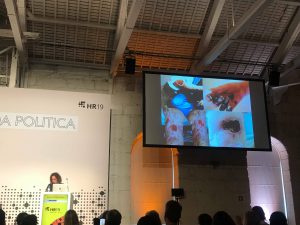
As Nanna Gotfredsen from the Danish Street Lawyers said in her talk, by documenting the harm caused by repressive drug policies we can easily show what putting politics before people means. If only we could do the same with stigma and discrimination that these policies entail. People who use drugs are criminalized, stalked by the police, and at the same time have a hard time accessing legal aid almost everywhere in the world. There was a special session at the conference aimed at discussing the practices of paralawyers, or street lawyers, as a solution to this issue. Such programs of peer help to victims of human rights violations or violence  have been implemented in Denmark, Indonesia, and Russia, among others, and they were proven to be effective even in such severe circumstances as in the case of the Philippines.

For people coming from countries with draconian drug policies, like myself, the Portugese officials said a lot of groundbreaking things like ”criminal justice is never good for issues related to drug use” coming from the police representative or everyones favorite from a member of parliament Ricardo Baptista-Leite ”harm reduction and love have one thing in common they both should be unconditional”. To get to the world with a human-rights-based drug policy, we should encourage politicians to meet with people who use drugs, and, more generally, make people living at the margins of the community visible to the community and be helpful not only to people who use drugs but also to politicians and the police, ”allow them to take credit and praise them.”

  • Paris

A month later, another drug policy conference took place in Paris, this time bringing together scholars from all over the world. It was the 13th annual conference of the International Society for the Study of Drug Policy. For EHRA, this was the first time attending such a gathering.  Most of the speakers there were from the UK and the United States, some were representing Africa and Latin America. Our CEECA region was severely underrepresented at the conference, as I remember only two presentations covering Poland and the Baltic states (one of which was mine),  an done talk concerning a comparative analysis of drug policies in Germany and Azerbaijan.
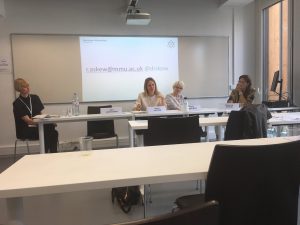
Due to the growing number of countries which have legalized cannabis for medical and/or recreational use, the number of presentations on various issues related to this vast topic was enough to spend three whole days listening only about it. At the opening of this conference Anne Souyris, the Deputy Mayor of Paris for Health, said: ”We always wait for dramatic health events to implement harm reduction. In order to be effective, drug policy should be flexible and adaptable. We should do it on the go, start small and then structure if necessary.” But even if the government is pro-active, the role of civil society is to keep the topic on the agenda, to work with the government, and make the law better. In Uruguay, before the legalization of cannabis, over 60% of people were against it at the beginning. The president administration initiated the reforms in order to fight against drug trafficking, not necessarily for the benefit of the people or in the name of human rights, and the adopted legislation would have never been as we see it today if it wasn’t for the activists.

All the relevant arguments that we as advocates and harm reduction practitioners need were represented there: the efficiency of drug consumption rooms, the importance of decriminalization and depenalization, legalization of cannabis, and sensible policing. There was an interesting presentation which concerned an analysis of all publications on decriminalization which revealed that prevalence of use is taken to be the dominant indicator of drug policy success. As a result, it seems that countries pass the laws for one reason, and then evaluate a totally different thing.

Due to “insufficient methodological tools to conduct community-based research,” community involvement in the research was presented as a new trend. The reasons why researchers ‘should’ collaborate with peers listed on one of the slides were:
  • Utilitarian: increasingly, funders require it
  • Ethical: peers have the right to be involved in any publicly-funded research that may affect their health status or the services that they receive
  • Epistemological: peers have first-hand knowledge of the issues under consideration
  • Consequentialist: collaboration has the potential to improve the quality, relevance and impact of the research

Whereas HR2019 was filled with people from the community, harm reduction practitioners and advocates, this conference was almost pure science. At the end of each presentation, I was hoping to hear something about how that piece of research was used in policy making, and what was the reaction of the government, health professionals, or any other relevant stakeholders. However, strangely, most of the time presenters did not say a word about the next steps and policy implications that followed from their research, or how it was used in advocacy, or to what extent it was effective. Also, the presenters did not explain the reasons why they had decided to pursue this topic in the first place.


To conclude, the two conferences got me into thinking about why although they shared the messages and general conceptual frameworks, they did not share the audience. Stigma related to drugs is divisive even for people who use drugs, one can see the split between “bad drugs” and “good drugs”, for example,  socially acceptable upper-class party use contrasted with “those people in the street we have nothing to do with.” We see separate conferences for harm reduction, psychedelic, cannabis and ayahuasca users, cultivators, scientists and activists, doctors and police, palliative care and access to pain management.  Repressive drug policies affect the quality of life and safety of every person, and can be used as a way of controlling the population and implementing political repressions just the way we recently saw in Russia or like we see it happening every day in the Philippines. We have a common enemy — repressive drug policies. We need to join our forces and create an intersectional drug policy movement.

The future of harm reduction in the CEECA region: EHRA holds a meeting on strategic planning for 2020–2024

The opening of a two-days Strategic planning meeting for 2020–2024 took place in Vilnius today.

On 9-10 July 2019, the members of the EHRA Steering Committee, experts from the Central and Eastern Europe and Central Asia region (CEECA) as well as the key staff of the Secretariat are working together with the aim to analyze the advocacy results of the last two years and plan the future operational activities of the Association.

The strategic objectives for the EHRA’s development were created in 2017 by a team of the Secretariat and the Steering Committee and based on the experience of harm reduction advocacy approaches and analysis of the situation in the region (Strategic framework for 2018-2019). Today, the Steering Committee will analyze the results of the implementation of the Strategy, based on the results of the survey for the Association members.

“It is already clear that we need to “fix”, to restart harm reduction in the region, to choose the most effective approaches to communication and advocacy. I suppose, even through provocations, but to inform the officials about the importance of helping people, not punishing them. I do hope that during the meeting we will be able to come up with new and fresh answers to complex challenges,” – says Anna Dovbakh, Executive Director, EHRA.

The agenda of this meeting is to develop a theory of changes with the answers to the following questions: how do we want to see harm reduction in the CEECA countries in 5 years, and what do we need to achieve this future, considering many factors, such as:

– widespread distribution of new psychoactive substances and the drug scene changes;

– changes in the level of harm reduction funding and the sources of these funds in different countries of the region;

– changes in the quality of harm reduction services and access to services with the transition to the national funding;

– drug policies toughening in countries;

– сhanges in the civil society participation in decision-making processes at the national and local levels.

“For an organization that brings together more than 250 organizational and individual members in 7 CEECA subregions, it is important to develop strategic directions that will consider existing experience and introduce innovative approaches in advocacy; based on the enormous human and intellectual potential, to carry out work aimed at improving the quality of life for one and all at the national as well as at the regional level. It is important to go beyond the standard, not to be afraid to experiment and plan. After all, we are justly fighting for the fate of people, for the quality of their lives and a better future.” – Marina Chokheli, Chair of Steering Committee, EHRA.

“My expectations from the meeting in Vilnius relate to the importance of the role that EHRA plays today in drug policy reform in the EECA region. At the meeting, we need to decide our Strategy and course of the actions, so these changes in the existing punitive laws in most of our countries regarding people who use drugs could occur as soon as possible. The EHRA Strategy today is not a theory and the reasoning, as it could be, but it is our actions on which the life and health of specific people depend. There is a conditional “counter” in front of our eyes that shows how many people TODAY are arrested, how many TODAY have died from overdoses and lack of help, how many TODAY have become HIV-positive, etc.

This meeting is also important for EHRA too. It is important for us to hear each other life, to find common ground in the work of the Secretariat and the Steering Committee, to unite our efforts in order not to become the heroes of the fable “The Swan, the Pike and the Crab.” One team, one goal, actions in one direction – we cannot leave Vilnius without it.”- Alexander Levin, Steering Committee Co-Chair, EHRA.