Thank you for support to EHRA in 2017!


Now when we are full of holiday excitement, the only feeling which EHRA team has towards our partners is deep gratefulness for your support! Being registered in spring and having started active operations in September, we already have a lot to be proud of.

By the end of the year Eurasian Harm Reduction Association (EHRA) unites 185 members from all CEECA countries.  For the Association, the main task is to build proper governance processes to involve members into content discussion and decision making.

On 27th of November the first General Meeting of EHRA members was successfully completed. As a result, we have the Steering Committee representing all sub-regions, supported by all voting EHRA members. The in-person Steering Committee meeting will be held in February 2018.

The Statute of EHRA was updated by the decision of the General Meeting, and now the governance structure includes in line with the General and Regional Meetings and the Steering Committee, an Advisory Board and a Treasurer to ensure the transparency and sustainability of the organisation.

The General Meeting also approved EHRA strategic framework for 2018-2019. Full scale strategic planning process is planned for the second part of 2019. Mission of EHRA is defined as the creation of favourable environment for sustainable harm reduction programs and decent lives of people who use drugs in CEECA region.

We have ambitious strategic objectives:

SO1: To ensure sustainability and efficiency of harm reduction services in CEECA region;

SO2: To advocate for non-punitive drug policies in CEECA region based on public health and human rights;

SO3: To develop leadership and expertise of civil society and people who use drugs in monitoring of drug policies, financing, access and quality of harm reduction services in CEECA region;

SO4: To strengthen organizational governance and operational systems, program efficiency and financial sustainability of EHRA.

EHRA is now implementing 9 advocacy, regional coordination and community capacity projects with a 1,5 mln Euro budget, 450K of which were received in 2017. We are grateful to our partners from the Global Fund to Fight AIDS, Tuberculosis and Malaria, AFEW International, Open Society Foundations, Robert Carr civil society Networks Fund, Rights Reporter Foundation, International Network of People Who Use Drugs, Levi Strauss Foundation, who have supported building capacities of the Association and helped to start-up the operations and program activities in a rather crisis situation.

During this period EHRA has already supported 8 drug users community groups and civil society organisations through small grants program. We are proud to support work of DUNews, unique video advocacy initiative. For regional community of people who use drugs, a study-tour visit to Porto to examine effective alternatives to punishment and to discuss drug policy reforms in EECA countries organised by EHRA, was a very important step in learning and joining efforts.

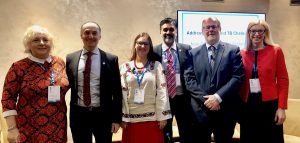
For the Association, it is strategically important to provide platform for joint advocacy efforts of different civil society organizations and regional communities aimed at ensuring sustainable funding of services for drug users. Since December 2017 EHRA has started to work as a Regional CRG platform to coordinate technical support for communities in the region. We have already played an active role as regional civil society representatives in the Senior Level Policy Dialogue “Addressing HIV and TB Challenges: from Donor Support to Sustainable Health Systems”, conducted under the auspices of the Estonian Presidency of the Council of the European Union, and participate in the work of the EU Civil society forum on HIV, TB, Hepatitis core group.

Since November we already have a fully functioning office with necessary equipment and 13 full-time Secretariat staff members. Operational procedures, accounting system and all documents are already in place.

These all have become possible only because of cooperation and active work of the Steering Committee members, Secretariat staff who worked for two months as volunteers to start EHRA operation, and thanks to support of civil society colleagues and partners all around the Globe. This year has proved that we are very strong and together we can overcome any challenges.

The EHRA Steering Committee and Secretariat team are ready for 2018 in full power! We are working to ensure a voice of the CEECA region in AIDS2018 in Amsterdam is heard. We are looking forward to work together with key regional community networks in joint advocacy efforts and capacity building initiatives.

Looking forward to our bright partnerships in 2018!

Happy holidays!

EHRA Steering Committee and Secretariat

EECA Regional Communities Consortium is created

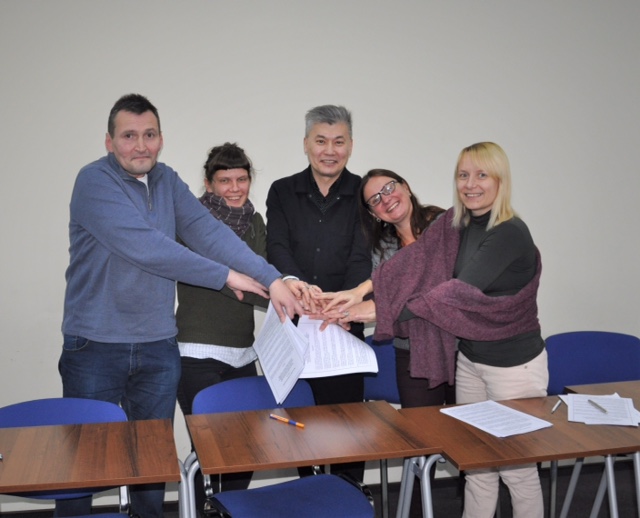
A Memorandum to create an EECA Regional Communities Consortium has been signed on December 20, 2017 in Kyiv, Ukraine. The goal of the Consortium is to unite the efforts of key populations networks of Eastern Europe and Central Asia (EECA) in developing a long-term multi-country program on increasing efficiency and sustainability of national HIV strategies in the region.

The Consortium members believe that strategic and sufficient national funding international cooperation and meaningful participation of key communities are laying the ground for effective national responses to the HIV epidemic in EECA. Main joint priorities for communities are ensuring of HIV prevention and treatment sustainability and quality combined with reduction of prices of HIV drugs.

The Consortium members plan to approach the Global Fund to Fight AIDS, Tuberculosis and Malaria for financial support for a multi-country program.

The Regional Communities Consortium consists of following key communities’ networks:

–          Eurasian Harm Reduction Association (EHRA),

–          Eurasian Coalition on Male Health (ECOM),

–          Eurasian Network of People Using Drugs (ENPUD),

–          Eurasian Women’s Network on AIDS (EWNA),

–          Sex Workers’ Rights Advocacy Network (SWAN).

Healthcare for people who use drugs in Europe

Author: Yuliia Holub

Today and tomorrow, EHRA representatives work actively as the members of core group of EU HIV/AIDS, Hepatitis and Tuberculosis Civil Society Forum (CSF) in Luxembourg and during the plenary meeting.

CSF (on European level) is a providing platform for mutual learning and strategic thinking to improve policies and their implementation by stimulating the exchange of knowledge and knowhow between CSF members and the European Commission. What’s more, it helps in strengthening the advocacy for the rights of the key communities living or affected by these infections by addressing short-comings in the response to the epidemics, sharing knowledge and consensus building on standards to address critical and sensitive issues and contributing to European level policy and program development.

At the meeting, and in the work of the CSF for the next 6 months, for EHRA it is important to ensure effective joint advocacy for sustainable funding of harm reduction services in European countries, members of EU as well as candidates and neighbouring countries. In the situation when on EU level the general approach is “health is member state competence”, there are not enough opportunities for the regional advocacy exist. But we want to be sure, that we did everything to influence governments of European countries to make HIV, TB and hep C services available for people, who use drugs and other vulnerable groups.

Community, Rights & Gender Technical Assistance Program

The Community, Rights and Gender (CRG) Technical Assistance Program provides support to civil society and community organizations to meaningfully engage in the Global Fund model, including during:

  • Country dialogue
  • Funding request development
  • Grant-making
  • Grant implementation

Under this program, national civil society and community organizations can apply for technical assistance in a range of areas, such as:

  • Situational analysis and planning
  • Participation in country dialogue
  • Program design
  • Oversight and monitoring of grant implementation
  • Engagement in sustainability and transition strategy development

Some examples of technical assistance requests include:

  • Support to design, plan and implement a consultation process to identify key population priorities for HIV funding request development
  • Designing and budgeting for community systems strengthening programs as part of the grant-making process
  • Facilitating a funding request review among youth organizations to identify gaps and propose appropriate interventions for inclusion
  • Proactive, peer-led community engagement support to civil society and community in sustainability and transition planning

Technical assistance is provided by nongovernmental organizations – including key population networks, universities and civil society organizations – that were selected through an open tender process for their demonstrated skills and capacities on community, rights and gender competencies.

  • CRG Technical Assistance Program Providers List
    download in English

The program currently does not support:

  • Strengthening Country Coordinating Mechanisms
  • Long-term capacity building of civil society organizations
  • Funding request writing

Organizations can request CRG technical assistance at any time throughout the funding cycle.

To learn more about CRG technical assistance, download these resources:

Requests should be submitted using the form and should be sent via email to crgta@theglobalfund.org.

The CRG Technical Assistance Program is one part of a US$15 million Global Fund Board-approved strategic initiative that runs through December 2019. The strategic initiative aims to ensure that all people who are affected by the three diseases can play a meaningful role in Global Fund processes and ensure that grants reflect their needs.

Source: The Global Fund

Sustainability and integration of HIV and TB services for vulnerable people in Europe is in focus

Author: Yuliia Holub

In 2014, WHO diagnosed in European region 80% more new HIV cases than ten years earlier. The Eastern part of the region has the fastest growing HIV data and the second lowest treatment access in the world. As well as the highest rates of the global multidrug-resistant tuberculosis (MDR-TB) (about 20%) and drug resistance among treated TB cases. Having emerging HIV and TB situation in European countries, problem of sustainable funding of the response. In the response of the transitioning to domestic funding of the HIV and TB services in European region and accenting attention on the possibilities integrate them in universal health coverage , on 12-13 December 2017, the Estonian Presidency of the Council of the European Union is launching a high-level dialogue – “Addressing HIV and TB Challenges: from Donor Support to Sustainable Health Systems”.

During the two-day event, representatives of international and state institutions, civil society, NGOs, technical agencies and donors will discuss current challenges and opportunities in the European Union and neighboring countries for successful integrating TB and HIV services into national and European health systems. Besides, the participants will get possibility discuss practical and effective access to health care, especially for key affected populations.

Being involved in the organising the event, Eurasian harm reduction association is keen to discuss burning issues of the sustainable domestic funding for harm reduction services and its integration into health and social care systems with high level decision makers, regional experts and colleagues from regional community networks.

“In fact we already know what need to be done for effective response on HIV and TB among people using drugs. All standards are developed, trained social workers are in place. We do have money. Unfortunately millions of taxpayer resources are spend now for caching drug users by police and keeping them in prison, which only cause social and health problems but not solving anything. So where is the key obstacle for being effective in epidemic response? In political will, but more correctly – in political sabotage. With several miracle exceptions, decision makers do not hear our arguments for effective programs.

But we will not stop our pushing for prioritisation of services for communities. We need to mobilise communities on municipal and city level for active advocacy for the sustainable services” – says on the first plenary of the meeting Anna Dovbakh, the Executive Director of Eurasian Harm Reduction Association.

In the result of the meeting “Addressing HIV and TB Challenges: from Donor Support to Sustainable Health Systems” there will be outcome document with recommendations on integration of HIV and TB response in national health systems especially focused on sustainable financing of services for vulnerable groups in European Union and neighboring countries.

Regional Platform for Communication and Coordination begins its work in EECA region as part of the Global Fund’s CRG Strategic Initiative

Author: Yuliia Holub

Eurasian Harm Reduction Association was selected as a New Host of the Regional civil society and community coordination and communication Platform in Eastern Europe and Central Asia. 

The Regional Platforms for Communication and Coordination were established in 6 regions of the world by the Global Fund within its Community, Rights and Gender Special Initiative (CRG-SI) which was implemented throughout 2014-2016. In November 2016 the Global Fund Board approved $ 15 million to continue with the implementation of the CRG SI throughout the 2017-2019 funding cycle. As before CRG SI will be implemented via three mutually reinforcing components: (1) Short-Term Technical Assistance Program, (2) Long-Term Capacity Development and Meaningful Engagement of Key and Vulnerable Populations and (3) the Regional Platforms for Communication and Coordination. At the end of 2017 six civil society organizations were selected by the Global Fund to host the platforms and the region of Eastern Europe and Central Asia (EECA) has got a new host: the Eurasian Harm Reduction Association (EHRA).

The regional platforms for communication and coordination are expected to have a key role in engaging civil society organizations and community networks in Global Fund processes. They are responsible to foster regional dialogue, exchange knowledge and good practices among civil society actors and networks, as well as to disseminating information on technical assistance opportunities across civil society and community groups across all countries where the Global Fund has grants and/or countries under Global Fund multi-country grants.

To progress towards these goals, during the next 2,5 years the EHRA in its role as a regional platform will be aiming to achieve the following objectives in EECA region:

Objective 1. Further the meaningful engagement of civil society and community groups through regular bi-directional communication and provision of accurate and accessible information to enhance the knowledge and participation of these actors in Global Fund related processes.

Objective 2. Improve the overall impact of Global Fund programs and interventions, and disease responses more globally through strengthened engagement of civil society and communities affected by HIV, tuberculosis and malaria.

Objective 3. Expand access to technical assistance for civil society and community groups through greater coordination with the CRG Strategic Initiative short-term TA component, as well as key national, regional and global technical assistance partners.

Objective 4. Support strategic civil society and community capacity development initiatives through fostering spaces for engagement and collective participation in key decision-making processes, in particular as they relate to community, rights and gender.

More specifically the EECA Regional Platform activities in next 2.5 years will include a number of national workshops for civil society and community organizations involved into the implementation of the Global Fund grants as sub-recipients or sub-sub-recipients; regional workshop for CCM members from EECA countries – representatives of civil society sector; support for NGOs and CBOs in development of the quality TA requests for the CRG Technical Assistance; improvement of access to the Global Fund related information through webinars, info notes, coordination calls; and other activities.

“Meaningful involvement of communities and civil society into the Global Fund related processes in the region, especially those focused on transition to national funding of services –  is crucial to guarantee that those components of HIV\TB response of a high priority for KAPs are not lost within the transition and their sustainability is ensured”, says Anna Dovbakh, the Executive Director of the Eurasian Harm Reduction Association. “As a hosting organization of the EECA Regional Platform we will work to help community leaders to become key actors in the process of effective transitioning in the region”.

 Within the implementation of this project EHRA is planning to work closely with other key regional organizations and community networks in EECA. In particular EHRA will be aiming to develop a closer communication and cooperation with those organizations being selected as CRG Technical Support Providers in the region to allow timely provision of peer-to-peer technical assistance on human rights, gender, community systems strengthening.

You may follow us on a Platform’s Facebook Page as well as join the EECA Regional Platform Facebook group. The Web-site of the Regional Platform will be re-launched soon, and this will be announced separately.

Any questions regarding the work of the Regional Platform or how to apply for the Global Fund’s Community, Rights and Gender Technical Assistance you may address to Ivan Varentsov, EHRA Sustainability & Transition Advisor: eecaplatform@harmreductioneurasia.org 

EHRA announces Regional meeting to elect Steering Committee members

Eurasian Harm Reduction Association (EHRA) announces the convocation of the members’ meetings from the particular regions: Baltic states, Central Europe, South-Eastern Europe, Belarus-Ukraine-Moldova and Central Asia.

We invite all EHRA members from the above-mentioned regions to submit applications to become a member of the Steering Committee until 1 January 2018.

A list of Steering Committee members subject to rotation:

1. Agita Seja (Baltic states)

2. Peter Sarosi (Central Europe)

3. Yuliya Georgieva (South-Eastern Europe)

4. Liudmila Trukhan (Belarus-Ukraine-Moldova)

5. Aibar Sultangaziev (Central Asia)

Candidates should:

  1. Be a member of EHRA.
  2. Demonstrate readiness and ability to work responsibly and actively as a Steering Committee member.
  3. To reside within a region participating in the current elections.
  4. To avoid a potential conflict of interests, candidates cannot be representatives of Association’s donor organizations.

From 10 to 24 January, 2018 will be online voting to elect Steering Committee members in these five regions. And 25 January, 2018 EHRA will announce results.

If you have any questions, please address to Secretary of the Regional meetings Eliza Kurcevic, on e-mail: members@harmreductioneurasia.org

Call for Applications: AIDS2018 Abstract Support


Amsterdam Youth Force, Eurasian Harm Reduction Association (EHRA) and AFEW International invite applicants from Eastern Europe and Central Asia region (EECA) to submit drafts abstracts for XXII International AIDS Conference 2018 in Amsterdam (AIDS2018) to board panel of experts for review.

We would like to invite Eastern European and Central Asian (EECA) researchers, clinicians, scientists, community activists and young people to submit their abstracts to our EECA AIDS2018 Abstract Support team. Boosting the representation of academics in this region is important as this is the only region in the world where the epidemic is still growing. To increase the chances to present their work at the conference for researchers, clinicians, community activists and young people from EECA who may have less experience in writing scientific abstracts in English, we will be facilitating scientific and English language assistance. We will link you to a researcher or a professional in your field which can provide you with scientific feedback on how to improve the quality of your abstract. To specifically support young researchers and community activists, we also offer a feedback session via Skype to discuss the suggested changes to your work.

If this sounds like something you could benefit from, please read further about the eligibility criteria and review process.

Eligibility Criteria

You can submit your abstract to aids2018@afew.nl for a professional review if you are:

  • A (young) researcher, scientists, clinician, community activist or representative of community based organization or NGO; and
  • Planning to submit an abstract to 22nd International AIDS Conference 2018 in Amsterdam, 23-27 July 2018 (AIDS2018); and
  • Working in one of the following countries: Armenia, Azerbaijan, Belarus, Estonia, Georgia, Kazakhstan, Kyrgyzstan, Latvia, Lithuania, Moldova, Russia, Tajikistan, Turkmenistan, Ukraine, Uzbekistan;

The review process:

  • We will be accepting submissions from the 1st of December 2017 until the 10th of January 2018 in both English and Russian languages. The feedback to the submitted draft abstracts will be provided in two subsequent rounds. The first round panelists will provide in-depth feedback on the initial content, and the second round will allow for the final feedback on the adjusted version.

First round feedback will be sent out to applicants within 10 days after the submission. The timing for in-person communication shall it be needed, will be coordinated individually with each applicant.

  • Limited translation and editing services will occur between the 22 January and 2 February 2018.

For those who submit in Russian language, you will first receive feedback on the academic quality of your written piece. Following this, a limited number of abstracts will also be translated into English. This is based on the need, so please indicate your capacity for translation in the letter of motivation.

For the abstract submissions written in English, you will receive feedback on the scientific quality of work, and limited number of abstracts will get assistance with English editing. Again, please indicate your English skills and need for editing in the motivation letter.

  • Due to the limited capacity of the panelists, in total up to 110 abstracts will be able to receive feedback. Therefore, the rule “first come – first served” will apply. First 110 abstracts submitted from eligible applicants will be forwarded to a relevant panelist based on his/her expertise and academical background, for feedback and in some cases for personal communication.

Please send your abstract in Word format, include a brief letter of motivation, which scientific track you will be submitting to and details about yourself including your age if you would like to apply as a young researcher or community activist.

Below you will find links to materials on how to write conference abstracts, available in English and Russian.

Requirement to abstracts:

  • The abstract should be written in accordance with the official requirements of the AIDS Conference.
  • The draft abstract should be written in Russian or English.
  • The content of the abstract should be in line with one of the conference scientific tracks. The scientific track must be specified under the heading of the abstract.
  • There is a maximum of two abstracts per applicant.
  • Those applicants who want to receive language support either the translation into Russian, or editing of the English abstract, will have to submit a short motivation letter to explain why they need such support.

Confidentiality:

AFEW International, EHRA and Amsterdam Youth Force form a Steering Committee and the secretariat of the EECA Abstract support project. Only people designated to serve within Steering Committee and the secretariat and the reviewers assigned to each abstract will have access to the abstract submissions as well as the contact details of the applicants. We will not release any information on who has received assistance for their submissions at any point unless we have consent to do so.

Useful resources

  1. Abstract writing module available in Russian and English

An Abstract writing module is developed in collaboration with the International AIDS Society (IAS) – the organizer of the AIDS conferences, and written by editors of the Journal of the International AIDS Society, an open-access platform for essential and innovative HIV/AIDS research. It is available for everybody in English and translated into Russian by AFEW International.

  1. Online training on abstract writing

AFEW International has conducted a training on community based participatory research and abstract writing. This training was steamed live and records as well as hand outs and presentations are available in Russian here:

Abstract writing: structure, review criteria, submission tips

Good abstract title

On the road to AIDS2018: practical guide

Presentations and handouts (downloadable, please scroll down)

If you want to receive English presentations and handouts, please refer to the email address below.

  1. Tips and trick on how to write a good abstract.

AIDS2018: Preparing for registration and submitting abstracts. An Article was written by a young researchers Anna Tokar, in Russian is available here, and in English here

You can follow us on http://www.afew.org/aids2018eeca/ and https://www.facebook.com/AFEWInternational/ for all the updates on the available recourses and opportunities.

EHRA held it’s first online General Meeting

On 27 of November, Online General Meeting of the Eurasian Harm Reduction Association (EHRA) was closed. EHRA members made their choice for the main issues.

The General Meeting was declared opened on 13 of November via listserv (e-mails) for EHRA members (177 in total at the moment of the General Meeting). During the fortnight, they had possibility to discuss and vote for:

– EHRA Statute;

– EHRA Strategic Framework for 2018-2019;

– Interim Steering Committee and timeline for conducting Steering Committee elections by regions (Regional Meetings);

– Organizational title for registration in Lithuanian bodies – Eurazijos žalos mažinimo asociacija.

No further items were on the agenda.

Quorum needes 50% of members+1, which means that 90 members should participate in the General meeting according the Statute of the Association. 107 participants took part in the online General Meeting of EHRA members. 99 individual and organizational members’ votes are considered eligible for voting in the online General meeting. 8 participants’ votes were not counted as valid, because they didn’t have a right to vote in the EHRA Online General Meeting (not official individual or organizational members of EHRA). Thus, quorum was reached, as 56% of members participated in the General meeting.

As a result, the online General Meeting approved all four announced EHRA strategic issues:

  1. Statute (Confirmed – 99; Didn’t confirm – 0; Abstained – 0).
  2. Strategic Framework for 2018-2019 (Confirmed – 98; Didn’t confirm – 0; Abstained – 1).
  3. Interim Steering Committee and timeline for conducting Steering Committee elections by regions (Confirmed – 91; Didn’t confirm – 1; Abstained – 7).
  4. Organizational title for registration in Lithuanian bodies – Eurazijos žalos mažinimo asociacija (Confirmed – 99; Didn’t confirm – 0; Abstained – 0).

“On behalf of the EHRA Secretary, I would like to thank each member, who took part in the first online General meeting of EHRA members for the active participation and involvement in the development of the Association processes. I’m very glad, that the first meeting was successful and that more then the half of EHRA members participated in it. There was no any interference in the online voting platform or violations of the voting procedures,” – said Eliza Kurcevic, EHRA Program Officer and Secretary of the General meeting.

EHRA announces a General Meeting of Members

On 13–27 November, 2017 Eurasian Harm Reduction Association (EHRA) conducts General Meeting of it’s members. During the fortnight, members of EHRA will have online-voting for four main issues:
1. Approval of EHRA Statute
2. Approval of EHRA Strategic Framework for 2018-2019
3. Approval of interim Steering Committee and timeline for conducting Steering Committee elections by regions (Regional Meetings)
4. Approval of the organizational title for registration in Lithuanian bodies.

All members approved by the EHRA Steering Committee may participate in the General Meeting. At the moment, there are more than 170 members. The full list of members is available on the EHRA website – https://old.harmreductioneurasia.org/members/

Details on the voting procedure and participation can be clarified by contacting members@harmreductioneurasia.org